1 — The Stockton birthday-party massacre: facts, immediate impact, and scale

A family gathering in Stockton, California, degenerated into one of the most harrowing mass shootings of the year when multiple gunmen opened fire at a child’s birthday party. According to law-enforcement reports, 14 people were shot, of whom four were killed and at least ten others were injured, including children. The attack occurred at a banquet hall in the evening and prompted an immediate, large-scale emergency response. Local elected officials described a grieving community and a city scrambling to account for victims and witnesses while the police launched a criminal investigation. The scale — dozens of victims in a single incident at a family event — traumatizes both the directly affected families and the broader community; hospitals were tasked with triage and outreach, and city leaders declared support measures for grieving residents. These immediate facts are well documented in contemporary reporting and form the baseline for every policy and social debate that followed.
2 — Targeted attack or random violence? The investigatory uncertainty
Early statements from investigators, witnesses and local officials emphasized uncertainty about motive. Some law-enforcement sources indicated the shooting may have been targeted rather than indiscriminate, a distinction that matters deeply for both prosecution and prevention strategies. If targeted, the attack suggests premeditation and specific interpersonal or criminal conflicts — for example, gang retaliation or a personal vendetta — and would point investigators toward suspect identification via witness interviews, surveillance footage, social-media forensics, and ballistic evidence.
Thank you for reading this post, don't forget to subscribe!If indiscriminate, it would suggest different prevention and policy responses (secure-venue protocols, broader gun control measures, or public-safety initiatives). Investigative ambiguity in the immediate aftermath is typical but also politically consequential: public anxiety spikes when facts are scarce, while premature attribution of motive can misdirect investigative resources and public policy. Current reporting underscores that investigators had not publicly identified suspects or a definitive motive at the time of initial coverage .
3 — The human cost: children, families and long-term trauma
When a violent episode occurs at a children’s event, the psychological and social toll extends far beyond the physical injuries and fatalities. Survivors — especially children who witnessed the shooting or lost caregivers — face elevated risks of PTSD, anxiety, and developmental setbacks. Schools and local social-service systems must respond with trauma-informed care: counseling, school-based mental-health supports, and community memorials that help restore a sense of safety.
The logistics are also real and persistent: medical bills, lost wages for parents, funeral expenses, and longer-term educational disruptions for affected children. Community cohesion can either fray under the pressure of grief and blame or strengthen through mutual aid and advocacy for reforms; both dynamics commonly appear. Coverage emphasized the presence of child victims and the deep emotional shock in Stockton, which will shape both immediate relief needs and sustained public demands for policy action .
4 — Public policy debate: renewed calls for gun-safety measures
High-casualty events almost always reopen the long-running U.S. debate over firearms policy. Advocates for stricter laws point to background-check expansion, limits on certain high-capacity firearms, strengthened safe-storage rules, red-flag laws, and federal enforcement resources as measures that could reduce similar tragedies. Opponents emphasize Second Amendment protections and resist measures they view as punishing law-abiding owners. The policy impasse is not only ideological: legislative feasibility varies by state and Congress, and evidence about which interventions most reduce mass shootings remains contested.
In the wake of the Stockton tragedy, expect renewed local organizing, political pressure on state legislators and congressional representatives, and intensified media and civic conversation — but also predictable political polarization that can delay or blunt legislative outcomes. The events in Stockton thus act as both an immediate humanitarian crisis and a trigger for policy contestation.
5 — Underlying drivers: gangs, personal vendettas, socioeconomic stressors
While firearms are the proximate instrument of harm, analysts and community leaders point to structural and situational drivers that turn conflicts lethal: unresolved interpersonal disputes, gang dynamics, recirculating cycles of retaliation, concentrated poverty, under-resourced youth programs, and limited access to mental-health services. Where gang or organized-crime dynamics are present, shootings are often symptomatic of broader illicit economies and fractured social networks. Conversely, incidents that arise from personal vendettas reflect breakdowns in dispute-resolution pathways and limited community mediation capacity.
The policy response that ignores these root causes risks treating only symptoms. Effective long-term violence reduction blends law enforcement (targeting violent actors) with community investment (jobs, after-school programs, mental-health access), and credible data-driven interventions (focused deterrence, hospital-based violence interruption). Reporting around the Stockton event raised these familiar questions, underscoring that prevention requires combined public-health and criminal-justice strategies .
6 — The national security and political ripple: other violent incidents (DC National Guard shooting)
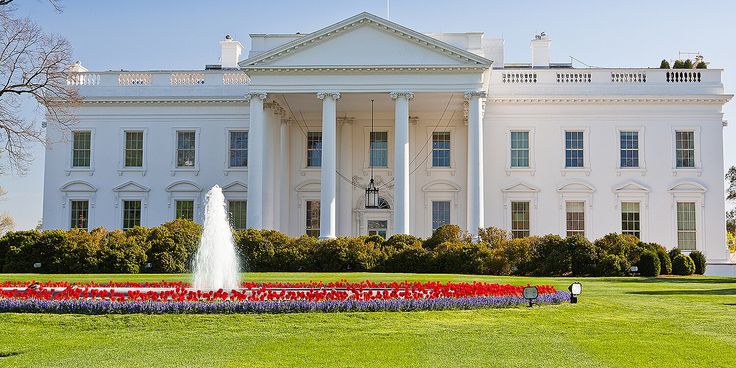
At nearly the same time the Stockton shooting dominated local headlines, a separate, high-profile shooting near the White House wounded two National Guard members and later resulted in the death of one service member. That incident — reportedly involving an Afghan national who arrived through prior U.S. resettlement programs — stoked intense political reactions and prompted a rapid federal response. Incidents that involve military personnel in high-visibility locations produce immediate policy fallout:
public demands for rapid security reviews, shifts in the rhetoric of national leadership, and potential executive or legislative actions. Taken together, local mass shootings and targeted attacks on service members create a composite national narrative of insecurity that shapes policymaking across distinct domains: policing, immigration, and homeland security. Contemporary reporting connects these events in the public conversation and shows how one incident can amplify the political consequences of another.
7 — Immigration securitization in response to high-profile attacks
The White House–area shooting prompted immediate governmental emphasis on immigration and asylum policies — an archetypal political pattern in which violent incidents become the impetus for tightened border and visa rules. Officials framed visa and asylum suspensions for certain nationalities as necessary national-security precautions, highlighting the suspected attacker’s immigration background. Critics counter that such sweeping policies risk stigmatizing entire refugee and immigrant groups, undermine longstanding humanitarian commitments, and can close off safe legal pathways that reduce irregular migration.
The policy trade-offs are stark: expedited restrictions may assuage short-term political pressure and appear decisive to some constituencies, but they can also complicate international relations, hamper refugee protection, and produce long-term social and legal consequences. The reporting around the DC attack shows this pattern clearly — policymakers rapidly shifted from incident response to immigration policy pronouncements, illustrating how security shocks can reframe migration debates.
8 — Humanitarian and diplomatic consequences of visa/asylum clampdowns
Beyond domestic politics, visa suspensions and asylum restrictions carry international ramifications. Sending strong signals about reduced refugee intake can strain bilateral relations with origin countries, limit cooperation on consular matters, and damage the United States’ global reputation as a refuge for people fleeing persecution. Humanitarian groups warn that such policies force vulnerable populations into more dangerous migratory routes and reduce oversight of vetting systems that balance security with protection.
There is a reputational cost: allies and partners may perceive the U.S. as retreating from global responsibilities, diminishing its moral authority in diplomatic negotiations and multilateral fora. Coverage of recent policy shifts after the high-profile shootings emphasizes these trade-offs, noting that security objectives must be balanced against humanitarian commitments and long-term diplomatic interests .
9 — The Venezuela airspace pronouncement: facts and the diplomatic shock
A separate, consequential foreign-policy development occurred when the U.S. president publicly declared that airspace above and around Venezuela should be considered “closed.” Major outlets reported the statement as abrupt, unilateral, and lacking operational detail, and Caracas denounced it as a hostile and potentially unlawful act. The declaration intensified an already tense bilateral relationship, prompted retaliatory steps (including suspension of deportation flights), and created uncertainty among airlines and regional partners. International legal scholars and diplomats typically caution that such a unilateral airspace claim — short of coordinated multilateral aviation directives — risks violating sovereignty and international civil-aviation norms unless accompanied by clear multilateral coordination and legal justification. The reporting shows immediate operational confusion (airlines, pilots, and flags) and heightened regional diplomatic alarm .
10 — Strategic logic, risks, and regional implications of hardline Venezuela policy

The administration framed the airspace directive as a pressure tactic tied to counter-narcotics and political objectives. Proponents argue that aggressive postures can degrade illicit networks and signal resolve. Critics emphasize legal, humanitarian, and geopolitical risk: disrupting civilian travel and commerce, provoking reciprocal measures, and escalating to military confrontations if mismanaged. Moreover, unilateral measures can push other regional actors to take sides, complicating cooperation on migration, trade and security. The recent reporting highlights an additional practical problem: policy communications appeared fragmented, with military and diplomatic agencies publicly distancing themselves from the executive’s post, reflecting internal coherence problems that can magnify risk in high-stakes foreign-policy moves .
11 — “Narco-terror” framing and the militarization of counternarcotics
U.S. policy in 2025 showed a marked tilt toward framing certain drug-trafficking networks as “narco-terrorists” and using military capabilities — including strikes at sea, increased naval and air deployments, and surveillance technologies — to interdict flows and eliminate leadership targets. Recent military strikes in the Caribbean and a designated “Operation Southern Spear” indicate an operational shift: repurposing defense assets and advanced technologies (drones, AI sensors) to target transnational criminal networks.
Advocates say the approach disrupts sophisticated criminal enterprises; critics — including UN experts and legal analysts — warn of legal and ethical problems, collateral harm, and possible violations of sovereignty. Framing organized cartels as terrorism risks normalizing extraterritorial uses of force and expanding a “forever war” logic to criminal justice problems. Contemporary reporting documents both the strikes and the debate, underscoring that the strategy has domestic political, international-law, and human-rights consequences.
12 — Industrial and economic spin-offs: defense-tech and surveillance markets

The shift to militarized counternarcotics creates market opportunities for defense contractors, drone manufacturers, and AI surveillance vendors. Several outlets have reported rising government contracts for firms marketing persistent surveillance, signal-intelligence systems, and autonomous platforms — technologies originally developed for traditional theaters of war. While such procurement can drive innovation and jobs, it also raises governance questions: civilian oversight of surveillance tools, privacy protections, the domestic redeployment of military technologies against communities, and the long-term dependency of policy on expensive hardware rather than social interventions. The economic growth in defense-tech thus carries ethical and civic trade-offs that policymakers must manage if technological tools are to be effective and rights-respectful .
13 — Northwestern settlement: federal leverage, academic freedom, and funding dynamics
Northwestern University reached an agreement to pay $75 million to resolve a dispute that enabled the restoration of approximately $790 million in federal research funding that had been frozen. The settlement — and the federal linkage of grant restoration to specific institutional changes — triggered intense debate about governmental leverage over universities. Supporters argue that federal funding naturally carries compliance conditions (nondiscrimination rules, proper expenditure), while critics warn this sets a precedent for political pressure to quash campus dissent or reshape institutional governance.
The coverage shows university leaders weighing the operational necessity of restored funding against reputational and normative costs to academic freedom and open inquiry. The broader implication is that federal research dollars are a potentially powerful lever that administrations can use to influence higher-education policy and behavior.
14 — Legal integrity: dismissals of high-profile prosecutions on procedural grounds
Recent court rulings dismissed prosecutions against high-profile figures after courts found that the interim appointment of the U.S. Attorney who authorized those indictments was unlawful. These decisions underscore a core legal principle: procedural legitimacy matters. When key prosecutorial actions emerge from appointments that violate statutory or constitutional constraints, courts may void downstream actions — indictments, warrants, grand-jury proceedings — regardless of the underlying merits.
The rulings highlight how errors in appointment processes can produce substantial political and legal fallout: acquittals or dismissals on procedural grounds can be perceived as either vindication for defendants or as technical loopholes that thwart accountability. Contemporary reporting of the dismissals emphasizes the judiciary’s role as a check on executive and prosecutorial excess, while also noting that such outcomes intensify partisan narratives about law enforcement’s politicization .
15 — Information environment and political context: social-media news consumption and approval dynamics
Two structural trends shape public response to all of the above: (1) Americans are increasingly consuming news through social platforms (YouTube, Facebook, TikTok, Instagram, X), changing how information — and misinformation — spreads; and (2) the president’s approval ratings have weakened (recent Gallup reporting placed approval near 36%), amplifying political polarization and constraining consensus on policy reforms. The shifting media environment accelerates emotional and viral responses to tragedies and policy pronouncements while making nuanced policy deliberation harder.
Low presidential approval constrains executive leverage with Congress and affects the administration’s perceived mandate for bold actions. Together these trends mean that crises — domestic shootings or foreign-policy escalations — are processed through a fragmented, fast-moving information ecosystem and a fraught partisan context, complicating both policy formulation and civic recovery
About the Author