
1. Autonomous Decision-Making Frameworks

By 2030, corporations will rely on AI-driven decision frameworks that act as intelligent “executive layers.” These systems will independently assess massive datasets, simulate outcomes, and make real-time decisions in finance, logistics, HR, and cybersecurity. AI will eliminate bias, reduce latency, and provide strategic insights faster than any human team. Through continuous learning, these frameworks will evolve based on new data, ensuring decisions remain relevant and ethical. Supported by legal and environmental compliance engines, AI governance layers will ensure that automated actions adhere to regulatory standards. This will redefine leadership structures—human executives will oversee AI systems rather than making every decision manually. The result will be organizations that are faster, more objective, and strategically adaptable to market fluctuations, making corporate agility and precision the new business standard.
2. Fully Autonomous IT Infrastructure
The IT backbone of 2030 will no longer depend on manual intervention. AI-powered systems will manage infrastructure with self-healing, self-configuring, and self-optimizing capabilities. Through integrated robotic process automation (RPA) and natural language processing (NLP), IT environments will automatically detect anomalies, deploy fixes, and allocate resources across servers or cloud networks. Predictive maintenance powered by machine learning will identify potential system failures before they occur, ensuring near-zero downtime. This will drastically lower operational costs and reduce human error. In effect, corporate IT departments will transform from reactive problem-solvers into proactive orchestrators of intelligent digital ecosystems. The autonomous infrastructure will enable uninterrupted business continuity while adapting dynamically to evolving workloads, security needs, and business demands.
3. Predictive AI-Driven Cybersecurity
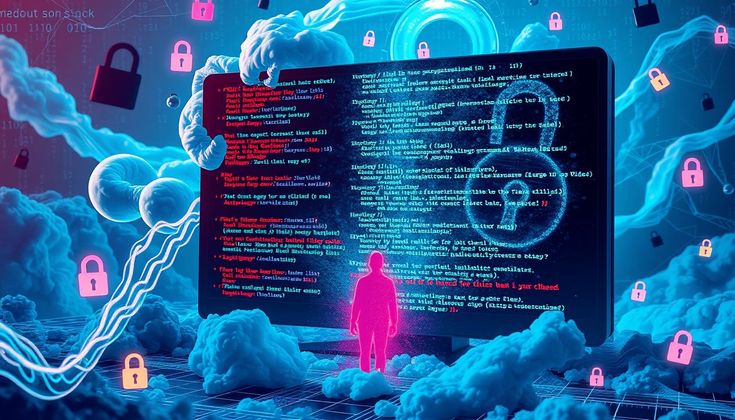
Cybersecurity in 2030 will be predictive rather than reactive. AI algorithms will continuously monitor digital ecosystems, detect anomalies, and neutralize emerging threats in real time. Using deep learning and behavioral analysis, these systems will anticipate hacker patterns and prevent breaches before they happen. They will learn from every cyberattack, improving autonomously after each incident. AI will protect data across IoT devices, cloud services, and global supply chains with dynamic, context-aware firewalls. Integration with quantum encryption will ensure unbreakable security. Furthermore, AI-powered governance will continuously verify compliance with global data protection regulations. This proactive defense approach will make cybersecurity an intelligent, self-evolving process that significantly minimizes human oversight and reduces the impact of cyber threats on critical operations.
4. AI Forecast Management and Strategic Planning
By 2030, traditional forecasting methods will be replaced by AI-driven strategic planning systems. These platforms will aggregate real-time data from consumer trends, financial markets, and global events, generating scenario-based predictions that guide executive decision-making. AI will simulate the impact of strategic choices before they’re executed, minimizing risk. For instance, an AI could analyze global trade patterns, climate risks, and political conditions to recommend investment timing. Such predictive insight will turn uncertainty into a manageable variable. Executives will no longer rely solely on intuition but on AI-backed foresight, ensuring decisions are data-grounded and future-oriented. These systems will make organizations resilient to volatility and capable of anticipating disruptions long before they occur.
5. Human-AI Collaboration Ecosystems
AI will not replace humans—it will enhance them. In 2030, corporate environments will integrate human-AI collaboration frameworks where digital twins simulate workflows, manufacturing processes, and even employee performance. These virtual models will allow managers to test process changes without real-world risks. Personal AI assistants will handle scheduling, document organization, and communication prioritization, allowing employees to focus on creativity and strategy. AI mentors will monitor employee performance and suggest personalized development plans. Collaboration platforms will integrate natural language AI capable of summarizing meetings, generating insights, and facilitating cross-department innovation. Together, this human-AI synergy will increase workplace efficiency and satisfaction while creating a workforce that continuously learns, adapts, and innovates.
6. Generative AI in Product Design and Innovation
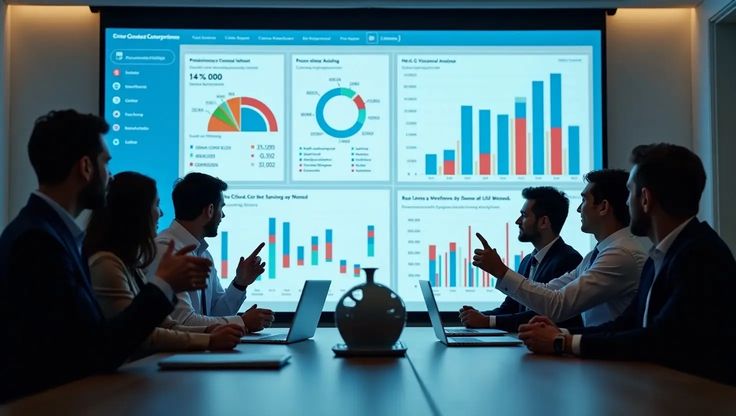
Generative AI will dominate corporate innovation by 2030. Using neural networks and simulation modeling, AI will autonomously design products, write software code, and even test market responses before production. In manufacturing, generative algorithms will optimize material usage, reduce waste, and enhance durability. In IT, AI will write and debug code, accelerating development cycles. Corporate R&D departments will evolve into AI-assisted creativity hubs, where ideas are generated, validated, and refined in real time. This approach will shorten time-to-market while lowering development costs. Organizations will transition from reactive innovation to predictive creation, where AI anticipates market demands and creates solutions ahead of competitors.
7. Autonomous Business Intelligence (AI BI 2.0)
Business Intelligence will move beyond static dashboards to AI-driven “thinking” systems that interpret data, identify anomalies, and provide actionable insights autonomously. Executives will interact with BI platforms via natural language—asking questions and receiving AI-generated strategic recommendations. These systems will integrate financial performance, consumer sentiment, and operational analytics into unified reports. AI’s ability to contextualize data will ensure that leaders receive not just information, but decisions supported by statistical confidence levels. Over time, BI systems will learn organizational priorities, evolving into digital advisors capable of simulating outcomes and suggesting risk-adjusted strategies. This transformation will democratize data access and make real-time analytics a foundation of all corporate decision-making.
8. AI-Driven Supply Chain Intelligence
Supply chain operations will become fully autonomous by 2030. AI systems will track global logistics using real-time satellite imagery, IoT sensors, and predictive modeling. They will detect potential disruptions like weather changes, geopolitical conflicts, or transportation bottlenecks and reroute resources instantly. Blockchain integration will enhance transparency, enabling traceable, tamper-proof transactions. AI will balance efficiency and sustainability by optimizing routes for lower emissions and energy use. Predictive demand forecasting will ensure precise inventory levels, reducing both shortage and overstock costs. This level of automation will create supply chains that are not only efficient but self-regulating and environmentally conscious — essential for competitive advantage in global trade.
9. Emotionally Intelligent AI for Customer Engagement
By 2030, emotional AI will enable companies to engage customers in a human-like, empathetic way. Using sentiment analysis, tone recognition, and contextual understanding, AI chatbots and voice assistants will detect customer emotions and adapt responses accordingly. These systems will not only solve queries but build long-term emotional connections, increasing loyalty and brand trust. In marketing, emotionally adaptive algorithms will design personalized campaigns that resonate with customers’ values and moods. Companies will be able to measure customer satisfaction through emotion-based metrics, helping refine service quality in real time. Emotional AI will turn customer interaction into a data-driven yet deeply human experience.
10. AI for Sustainability and Green IT

Sustainability will be at the center of AI innovation by 2030. AI will optimize data center energy consumption by dynamically adjusting cooling systems and workload distribution. Predictive environmental analytics will measure and reduce carbon footprints in real time. AI systems will align operations with ESG goals by selecting suppliers and transportation methods that minimize emissions. The emergence of low-power AI chips and smart networks will significantly reduce energy waste in IT infrastructures. AI will also guide policy decisions for organizations seeking carbon-neutral operations. As sustainability becomes both a moral and economic imperative, AI will play the central role in making digital growth ecologically responsible.
11. Cognitive Cloud Systems
Cloud infrastructure will evolve into cognitive ecosystems that think, learn, and optimize themselves. These intelligent clouds will manage computing resources across hybrid and multi-cloud environments automatically. AI will handle performance tuning, cost management, and workload orchestration with minimal human input. Using natural language interfaces, managers will instruct the cloud through conversation, while the system autonomously executes complex technical operations. This will make enterprise computing faster, cheaper, and more secure. Cognitive clouds will form the foundation of future digital enterprises, enabling scalable, adaptive, and sustainable IT environments that run with unprecedented efficiency.
12. AI-Governed Corporate Ethics and Compliance
Corporate ethics and compliance will become AI-managed systems by 2030. Automated compliance engines will continuously scan global regulations, updating company policies to align with new laws. These AI tools will interpret legal texts, evaluate risks, and recommend corrective measures in real time. Ethical AI governance frameworks will ensure transparency, auditability, and fairness in algorithmic decision-making. By integrating fairness detection and bias-correction modules, organizations will maintain accountability and trust. This automation will not only reduce legal risks but also create a culture of proactive compliance and moral integrity — transforming corporate governance from a static requirement into a living, intelligent process.
13. Personalized AI Learning and Employee Upskilling
The workforce of 2030 will learn through adaptive AI mentors that personalize training programs based on employee goals, skills, and performance data. These intelligent systems will analyze cognitive patterns and career aspirations, recommending relevant courses or projects. AI learning environments will use gamification, VR simulations, and real-time feedback to make upskilling immersive. This continuous, self-adjusting learning model will ensure that employees evolve alongside technology. Organizations adopting such systems will maintain future-ready workforces capable of navigating rapid industrial change. AI-driven education will replace traditional training departments, making lifelong learning a strategic advantage for every corporation.
14. AI in Corporate Finance and Auditing

AI will redefine corporate finance by automating financial planning, auditing, and investment decisions. Predictive analytics will forecast market movements, identify cost-saving opportunities, and allocate capital optimally. AI auditors will continuously monitor transactions to detect anomalies, fraud, or inefficiencies. Autonomous accounting systems will generate financial reports in real time, improving transparency and compliance. By integrating external economic data, AI will simulate multiple financial outcomes to guide strategic investment. This will minimize risk and enhance profitability. In short, AI will turn corporate finance into a predictive, autonomous, and self-correcting discipline.
15. Quantum-AI Integration for Strategic Advantage
By 2030, AI and quantum computing will converge to revolutionize business intelligence and problem-solving. Quantum-AI models will solve optimization and simulation problems at speeds unimaginable today. Corporations will use these systems to analyze financial risks, design new materials, or simulate supply chain networks in real time. Quantum-enhanced AI will deliver exponential computational power, allowing organizations to make strategic decisions with near-perfect accuracy. This will lead to breakthroughs in industries from pharmaceuticals to logistics, providing early adopters with a decisive competitive edge in innovation and performance.
16. AI as a Strategic Corporate Partner
In 2030, AI will evolve from a support tool to a core member of corporate leadership. AI systems will analyze global economic trends, simulate competitor behavior, and recommend long-term business strategies. Through generative simulations, AI will test mergers, acquisitions, and new market entries before human approval. Executives will rely on AI co-strategists for insight into sustainability, innovation, and talent management. These intelligent advisors will enhance precision, reduce decision latency, and ensure continuous adaptability. Ultimately, AI will not just support business strategy—it will define it, shaping the global corporate landscape toward data-driven leadership and sustainable success.