
1. Early Life and Family Background
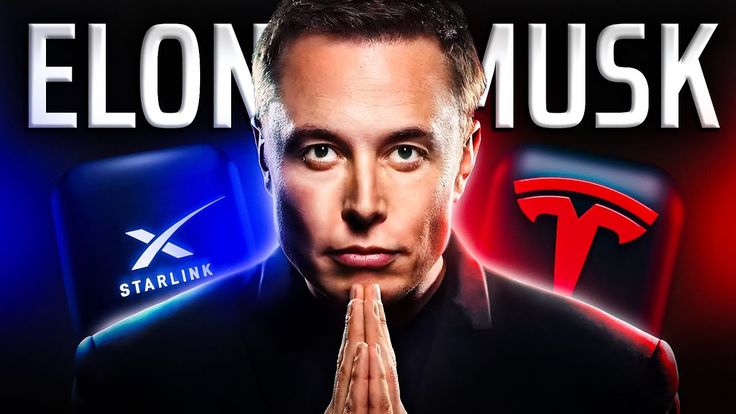
Elon Reeve Musk was born on June 28, 1971, in Pretoria, South Africa, to a family that encouraged intellectual curiosity and ambition. His father, Errol Musk, was a South African electromechanical engineer, pilot, and sailor, while his mother, Maye Musk, was a Canadian model and nutritionist. Growing up in an affluent environment, Elon developed a strong interest in technology and learning from a young age. He spent much of his childhood reading books, exploring science, and teaching himself about mechanics and engineering. His upbringing, although privileged in terms of educational access, was also emotionally challenging. Musk later described his father as emotionally difficult, creating a household that often felt isolating. At school, Elon was introverted and frequently bullied, especially during his middle school years. These early challenges motivated him to escape through learning and technology. His fascination with computers emerged at age 10, which laid the foundation for his future entrepreneurial journey. Elon’s family dynamics and social struggles shaped his resilience, independence, and determination. They contributed to his belief that success comes from overcoming hardship rather than relying on natural advantages. This period established the mindset that would drive Musk toward becoming one of the most influential entrepreneurs of the 21st century.
2. Early Education and Introduction to Computers
Elon Musk’s early education took place in South African schools, where he displayed exceptional intelligence and curiosity but struggled socially. His passion for computers began at around age 10 when his parents bought him a Commodore VIC-20. Rather than using it for games like most children, Elon taught himself programming through manuals and long practice sessions. By age 12, he had mastered basic coding and created a space-themed video game called “Blastar,” which he sold to a magazine publisher for approximately $500. This early success revealed both his entrepreneurial spirit and his capacity to turn ideas into products even at a young age.
His academic performance was strong, particularly in math and science, subjects he gravitated toward naturally. Despite excelling in many areas, he was often dissatisfied with the learning environment, believing schools focused too little on creativity and innovation. His computer experimentation during childhood also sparked a lifelong belief that software and digital technology could change industries. The skills developed during this period became critical when Musk later built companies dependent on digital systems—from online payments to autonomous self-driving platforms. His early hands-on relationship with computers provided a solid foundation for his later ventures and reinforced his love for learning through self-direction.
3. Move to Canada and the Pursuit of Greater Opportunity
At age 17, Elon Musk made the significant decision to leave South Africa and move to Canada in search of broader opportunities and to avoid mandatory military service under apartheid. He believed that the United States was the world’s best environment for innovation and technology, but he used Canada as his pathway to eventually reach the U.S. because of easier immigration options. Musk enrolled at Queen’s University in Kingston, Ontario, in 1989. Moving abroad at a young age without financial stability was challenging, and Elon supported himself through various small jobs, including farm labor, office work, and selling computer components.
His time at Queen’s helped him build important early connections and exposed him to diverse perspectives that differed greatly from his South African environment. The experience also taught him self-reliance and resilience, shaping his identity as someone willing to leave comfort zones to chase opportunity. After two years in Canada, Musk transferred to the University of Pennsylvania in the United States, fulfilling his larger goal of getting closer to the American technology ecosystem. His move to Canada was a bold step that demonstrated ambition, strategic thinking, and a long-term vision—qualities that would define his business career.
4. Education in the United States – Wharton and Physics
Elon Musk continued his education at the University of Pennsylvania, where he earned two bachelor’s degrees—one in Physics from the College of Arts and Sciences and another in Economics from the Wharton School of Business. This combination of science and business became one of the defining characteristics of Musk’s future ventures, giving him the rare ability to understand engineering challenges while also thinking strategically about market positioning and financial sustainability. Musk was known for his intense work ethic, often spending late nights studying or brainstorming ideas for the future. During his time at UPenn, he lived modestly, even renting a large house with roommates and turning it into a weekend nightclub to help cover living expenses.
His academic projects frequently focused on large societal problems such as clean energy and space exploration—areas many considered unrealistic at that time. Musk also briefly enrolled in a Ph.D. program in applied physics at Stanford University but left after just two days, believing that the internet revolution offered greater real-world opportunity. His educational years in the U.S. marked the evolution of a visionary thinker—one who balanced theoretical knowledge with practical application and developed the entrepreneurial mindset that would soon launch his first major company.
5. Founding Zip2 – Musk’s First Major Startup
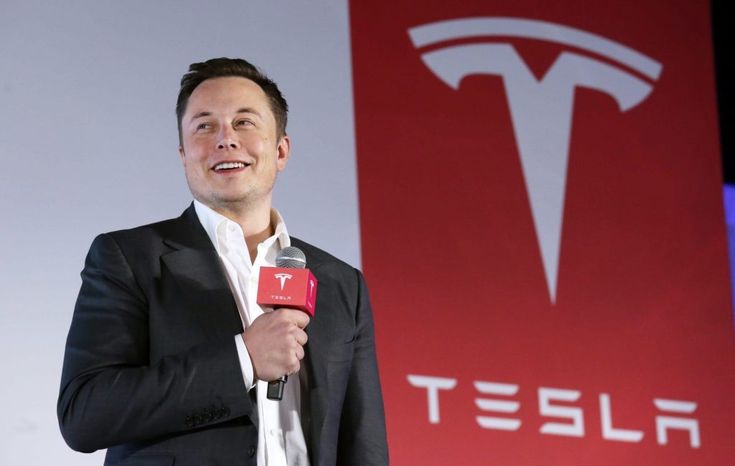
In 1995, Elon Musk co-founded his first major company, Zip2, with his brother Kimbal Musk. The company provided online business directories and city guides to newspapers, helping them transition into the digital era. Elon slept in the office and showered at a nearby gym to save money while dedicating nearly every waking hour to building the platform. At a time when many people doubted the commercial potential of the internet, Musk recognized that digital information services would become essential. Zip2 gradually secured partnerships with major newspapers, including The New York Times and The Chicago Tribune. Despite facing investor pressure that sometimes limited his control, Musk remained deeply involved in product development and innovation.
In 1999, Compaq acquired Zip2 for approximately $307 million in cash and $34 million in stock options. Elon personally received around $22 million from the deal, giving him both financial resources and validation as an entrepreneur. The sale of Zip2 marked Musk’s transformation from a startup dreamer to a recognized figure in the emerging tech scene. His first entrepreneurial journey taught him about scaling, investor relations, and the value of user-focused digital platforms. It also empowered him to pursue even more ambitious technological ventures.
6. X.com and the Birth of PayPal
After the sale of Zip2, Musk used his newfound financial success to launch X.com in 1999, an online financial services and digital payments company. At a time when traditional banks dominated personal transactions, Musk envisioned a future where money could move instantly online without the friction of physical processes. His goal was to build the world’s first true digital bank. X.com faced challenges from competitors and skepticism from the financial industry, but Musk pushed forward with aggressive growth strategies and a strong focus on customer experience. A year later, X.com merged with a company called Confinity, which had developed a payment system known as PayPal.
Internal conflicts arose about leadership structure, and Musk was eventually replaced as CEO, although he remained the largest shareholder. In 2002, eBay acquired PayPal for $1.5 billion in stock, and Musk received approximately $180 million from the deal. The PayPal experience cemented Musk as a key player in Silicon Valley and demonstrated the viability of disrupting traditional industries through technology. It also strengthened his confidence that digital systems could outperform legacy structures, a belief that later influenced Tesla, SpaceX, The Boring Company, and Neuralink. PayPal became a global leader in digital payments and remains one of Musk’s most impactful early contributions.
7. Vision for Space and Founding SpaceX
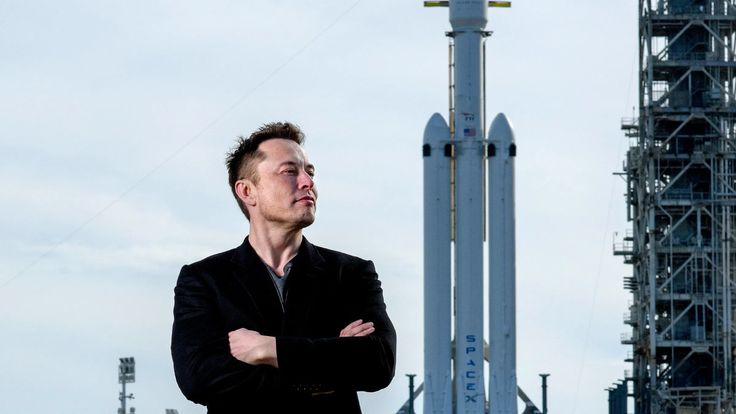
With financial security from PayPal, Musk shifted his attention toward one of his lifelong passions—space exploration. He believed that humanity needed to become a multi-planetary species to ensure long-term survival. In 2002, he founded Space Exploration Technologies Corporation, known as SpaceX, with the goal of dramatically reducing the cost of launching rockets and eventually colonizing Mars. Critics doubted his ambitions, arguing that space was too expensive for private companies to disrupt, yet Musk persisted. The early years were extremely difficult, with three successive rocket launch failures that nearly bankrupted the company.
Musk poured nearly all his personal funds into keeping SpaceX alive. Finally, in 2008, SpaceX’s Falcon 1 successfully reached orbit, making it the first privately developed liquid-fueled rocket to do so. That same year, NASA awarded SpaceX a major contract for cargo supply missions to the International Space Station, saving the company from collapse. SpaceX continued advancing with reusable booster technology, culminating in the Falcon 9 and Falcon Heavy programs. Musk’s vision extended beyond contracts—he wanted to build spacecraft capable of transporting humans to Mars. SpaceX became a symbol of bold technological ambition, proving that private companies could not only participate in space exploration but revolutionize it.
8. Founding Tesla and Reimagining the Automotive Industry
Elon Musk joined Tesla Motors in 2004 as a lead investor and soon became CEO and product architect. At the time, the automotive industry largely dismissed electric vehicles as impractical, expensive, and undesirable. Musk believed the opposite—that electric vehicles would one day outperform gasoline cars in speed, efficiency, and design. Tesla’s first vehicle, the Roadster, proved that electric cars could be high-performance machines capable of traveling more than 200 miles on a single charge. However, Tesla faced intense skepticism, technical challenges, and near bankruptcy during the 2008 financial crisis.
Musk invested much of his personal wealth to keep the company alive. With visionary engineering and strategic risk-taking, Tesla expanded its lineup with the Model S, Model X, and later the mass-market Model 3 Under Musk’s leadership, Tesla built large-scale battery manufacturing facilities known as Gigafactories and developed groundbreaking battery and energy technology. Tesla not only changed public perception of electric vehicles but also forced traditional automakers to accelerate their own electric programs. Musk’s leadership style—demanding, hands-on, and intensely focused—became a key driver of Tesla’s culture and success. Tesla grew into one of the world’s most valuable companies, making electric vehicles mainstream and positioning Musk as a revolutionary figure in the automotive industry.
9. Solar Energy and Sustainable Technology Ventures
Beyond electric vehicles, Musk wanted to transform global energy infrastructure to reduce dependence on fossil fuels. This led to the founding of SolarCity in 2006, co-created with his cousins Lyndon and Peter Rive. SolarCity became one of the largest providers of residential solar energy systems in the United States. Musk envisioned a future where homes could generate clean energy, store it in batteries, and power electric vehicles—creating an integrated, sustainable ecosystem. In 2016, Tesla acquired SolarCity and merged it into Tesla Energy, aligning solar power generation, storage, and transportation under one brand. The company developed innovative products such as the Powerwall home battery system and Solar Roof, a roof that integrates photovoltaic cells directly into building materials.
Musk also championed large-scale renewable energy projects, including utility-grade battery installations capable of stabilizing power grids. His push for solar and energy storage solutions expanded the renewable energy market and positioned Tesla as more than just a car company. Despite financial challenges and public skepticism, Musk remained committed to the vision of a cleaner, decentralized energy system. His work in solar energy reflected his broader mission: not just building successful companies but addressing global challenges like climate change through bold engineering solutions.
10. The Boring Company – Transforming Urban Transportation
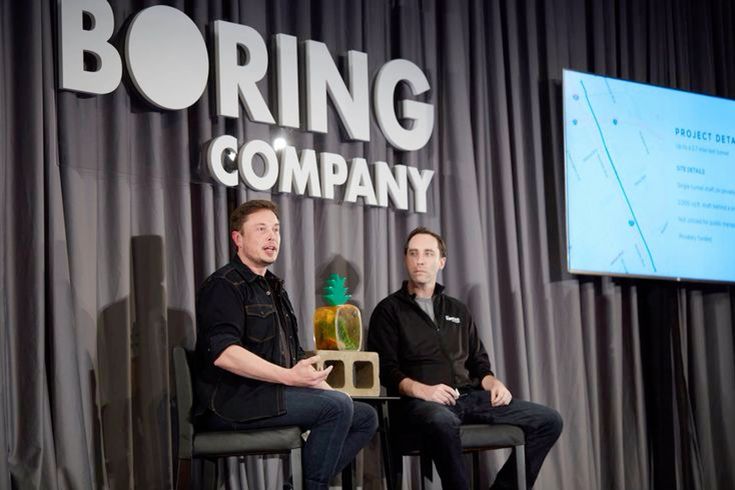
In 2016, Elon Musk founded The Boring Company to address traffic congestion through underground transportation tunnels. The idea began after Musk expressed frustration with Los Angeles traffic and posted a tweet stating he would “just start digging.” Unlike traditional tunneling companies, Musk aimed to drastically reduce excavation costs and build a scalable system of transportation tunnels beneath major cities. The Boring Company’s goal was to create underground routes for passenger vehicles, cargo, and high-speed public transit. One proposed system, originally called the “Hyperloop,” envisioned vacuum-sealed tubes allowing passenger pods to travel at speeds of up to 700 mph, reducing travel time between cities such as Los Angeles and San Francisco to under an hour.
The company built demonstration tunnels, including one in Las Vegas used as a small-scale transportation loop.Although still experimental, the company introduced new tunnel-boring machines designed to increase digging speed while reducing cost. Musk’s vision for underground transit challenged traditional city planning and infrastructure systems, pushing governments and engineers to rethink urban mobility. While critics argued that public transit and city planning reforms might be more practical solutions, Musk believed tunnels offered long-term potential to reduce congestion without impacting surface-level real estate. The Boring Company highlighted Musk’s ability to apply technological thinking to everyday urban problems.
11. Neuralink – Bridging Humans and Machines
In 2016, Elon Musk co-founded Neuralink with the goal of developing brain–computer interface (BCI) technology capable of connecting the human mind directly to computers. Musk believed that as artificial intelligence advanced, humans risked falling behind in cognitive capability. Neuralink’s mission was to enhance human abilities, treat neurological disorders, and eventually enable direct communication between the brain and digital devices. The technology involves implanting tiny electrodes into the brain to record and stimulate neural activity. Early goals included helping patients with paralysis regain movement, assisting those with spinal injuries, and treating conditions such as epilepsy and memory loss. Neuralink made headlines by demonstrating implanted devices in animals and later beginning clinical trials with human volunteers.
Musk described long-term possibilities where Neuralink could restore lost senses, enable digital telepathy, or even serve as a safeguard against future AI dominance. Critics raised concerns about the ethical implications, surgical risks, and commercialization of neurological intervention. Musk acknowledged these concerns but believed the benefits outweighed the risks. Neuralink represented Musk’s pursuit of advanced human evolution through technology—aligning biological systems with artificial intelligence and pushing scientific progress into areas once limited to science fiction.
12. Leadership Style and Work Ethic
Elon Musk is known for an intense leadership style characterized by high expectations, direct communication, and relentless focus on innovation and execution. He often works extended hours, sometimes sleeping on factory floors during critical production periods. Musk believes leaders must be willing to do the work they ask of others, and he frequently participates directly in engineering decisions, product design, and manufacturing problem-solving. Supporters view his leadership as inspiring and visionary, driving teams to achieve goals thought impossible. However, critics argue that his demanding expectations and aggressive timelines create stressful environments that may contribute to employee burnout.
Musk promotes a culture of rapid iteration, encouraging employees to constantly challenge assumptions, eliminate inefficiency, and take risks. He also values technical expertise and often prefers engineers in leadership roles. Despite controversy, Musk’s management style has undeniably accelerated innovation in industries slow to change—automotive manufacturing, aerospace, energy, and infrastructure. His leadership is built on the belief that solving global problems requires extraordinary focus and sacrifice. Whether praised or criticized, Musk’s work ethic reflects his personal commitment to pushing humanity forward through large-scale technological breakthroughs rather than settling for incremental progress.
13. Public Image and Media Influence
Elon Musk has cultivated one of the most recognizable public brands of any modern entrepreneur. His presence on social media platforms, particularly Twitter (now X), allowed him to communicate directly with millions of followers without traditional media filters. Musk’s online personality is unconventional—mixing serious announcements with jokes, memes, and controversial statements. This approach won him a massive fan base but also generated frequent media scrutiny. Investors, analysts, and journalists closely monitor his social media activity because his comments have been known to influence market behavior. Musk’s bold personality and willingness to publicly challenge governments, regulators, competitors, and journalists increased his image as a fearless disruptor.
Films, documentaries, news media, and even pop culture—including appearances on shows like “The Simpsons” and “Rick and Morty”—helped solidify his cultural impact. Critics argue that Musk sometimes acts irresponsibly or overconfidently, while supporters see him as a visionary unafraid to confront outdated systems. His public image evolved into a symbol of 21st-century technological ambition, blending celebrity-level attention with engineering-driven credibility. Musk’s approach to communication changed how CEOs interact with the public, proving that direct digital engagement could build influence faster than traditional corporate marketing strategies.
14. Major Achievements and Global Recognition

Elon Musk’s career is marked by achievements that reshaped multiple industries. SpaceX became the first private company to launch, orbit, and recover a spacecraft, and eventually the first to dock with the International Space Station. Its development of reusable rockets drastically reduced launch costs and reinvigorated public interest in space exploration. Tesla transformed the global automotive industry, proving electric vehicles could be viable, high-performing, and desirable. Musk also played major roles in popularizing renewable energy storage, solar power integration, and autonomous driving systems. His companies achieved breakthroughs many believed would take decades, compressing timelines and forcing competitors to innovate.
Musk received numerous awards and global recognition, including being named Time Magazine’s Person of the Year. His achievements positioned him as the world’s richest person multiple times, reflecting the value of his companies and influence. Musk’s accomplishments demonstrated that one individual could accelerate change across entire technological sectors—transportation, space, energy, and infrastructure. While his career included financial risk, public doubt, and difficult failures, Musk consistently pushed technological boundaries. His legacy includes not only products and companies but also a renewed sense of ambition in scientific and engineering progress.
15. Legacy, Impact, and Future Vision
Elon Musk’s legacy is defined by his relentless drive to solve some of humanity’s most pressing challenges—climate change, space colonization, AI evolution, and urban congestion. His companies represent bold attempts to address massive global problems rather than focus on short-term consumer needs. Musk often states that his long-term mission is to ensure the survival and progression of human civilization. Through Tesla, he accelerated the global shift toward electric vehicles and renewable energy adoption. Through SpaceX, he revived public excitement for space exploration and created real pathways toward Mars colonization.
Neuralink and The Boring Company explore futuristic concepts that might shape human society in unexpected ways. Musk’s impact extends far beyond business; he redefined expectations of what modern entrepreneurs can pursue. Instead of working within existing systems, he challenged them directly and proved that private companies could compete in industries historically reserved for governments. His future vision involves interplanetary travel, AI–human integration, and a planet powered by sustainable energy. Whether viewed as a genius innovator or a controversial risk-taker, Elon Musk’s influence on global technology, imagination, and ambition is undeniable. His work will likely continue shaping transportation, energy, science, and society for decades to come.