
1. US Grants $2 Billion to Transit Agencies for New Buses

The US Department of Transportation (DOT) has announced that it will provide $2 billion in grants to 165 local and state agencies to purchase approximately 2,400 new buses. Streetsblog USA
What’s Happening: This is part of a larger move toward low- and zero-emission public transit vehicles as part of the Infrastructure and Climate Agenda. Some of these buses will be battery-electric, some hybrid; this policy signals a shift in favor of clean fleets, although the previous government reportedly favored hybrid over fully battery-electric. Streetsblog USA
Why It’s Important: Upgrading bus fleets has multiple impacts—reduced emissions, improved air quality in cities, and possibly improved public transit service. It also signals investment in infrastructure and green mobility, which could alleviate some concerns about urban congestion and climate policy.
Analysis:
• Politically, this ties into the “build back better” narrative and domestic infrastructure investment, which could be popular across all parties, especially in urban and suburban districts. • From a climate perspective, this is positive, but its scale (2,400 buses) is small compared to the total US fleet, so the impact on emissions will be gradual.
• Operationally, agencies will need to adapt to new technologies (charging infrastructure, maintenance of electric buses), which raises cost and training issues.
• Strategically, the US is signaling to private transit vehicle manufacturers and states that the federal government expects cleaner fleets, which could boost industrial investment.
Note: While this isn’t a major step, it’s a significant step in transit modernization and clean transportation. It shows how domestic spending decisions are being aligned with climate and infrastructure priorities. ________________________________________
2. Stock Market Futures Rise Ahead of Thanksgiving Week
US stock-market futures rose early on Monday morning as the shortened Thanksgiving week began, with Nasdaq 100 futures up about 0.99% and S&P 500 futures up 0.68%. The Economic Times
What’s happening: Following the recent sell-off and mixed data from AI, the market is exhibiting “cautious optimism.” Trading volume is low for the coming week (due to the holidays), and investors are watching for signals about rate-cut expectations from the Federal Reserve. The Economic Times+1 Why it matters: The equity market is a real-time barometer of investor sentiment, expectations about growth, inflation, and central-bank policy. Rising futures indicate a mild risk-on bias. But holiday weeks can sometimes be volatile or deceptive due to low volume.
Analysis:
• Market sentiment is influenced by the possibility of the Fed lowering rates, or at least signaling that it might. This expectation has strengthened recently. Moneycorp
• The mention of the AI-induced sell-off suggests that the tech sector still holds systemic weight – fluctuations there impact the entire market.
• Low trading volume means the “signal-to-noise” ratio is low: large swings may reflect small trades rather than significant internal shifts.
• For investors and policy watchers: Keep an eye on macro-data (jobs, inflation, consumer confidence) coming this week; these, along with Fed commentary, will guide sentiment.
Note: The market appears slightly positive, but optimism is weak and based on expectations rather than strong fundamentals. With the holidays approaching, surprises remain possible.
3. US and Ukraine Report Progress at Geneva Peace Talks
The US and Ukraine held talks in Geneva and reportedly “drafted” an updated peace framework for the war with Russia, with US President Donald Trump claiming that “something good could come of it.” Sky News+1
What’s Happening: Following the talks, Germany’s foreign minister said “a lot of progress” had been made, but he also warned that a major breakthrough was unlikely this week: “small steps forward.” Sky News
Why It Matters: The war in Ukraine remains a major geopolitical theater. US diplomatic efforts, the design of peace proposals, and the participation of allies will all have far-reaching implications: on European security, the credibility of US foreign policy, and Russia’s attitude.
Analysis:
• Trump’s participation and the US’s central role suggest that any peace plan is likely to be strongly determined by US strategic interests.
• However, Ukraine’s warning (that any deal should strengthen Ukraine, not weaken it) indicates a tension between the need for peace and sovereignty concerns. Sky News
• The Kremlin’s response (stating it has not detected any changes) highlights the conflict: peace talks may move forward, but Russia’s consent is not yet clear. • Domestic US politics matter: foreign-policy success can increase legitimacy at home, but failure or missteps could lead to the loss of electoral capital.
• Takeaway: This is a high-stakes diplomatic issue. Progress is good, but expectations should be kept low – real breakthroughs are likely still some way off.
4. US Trade-Deal Dynamics: India Avoids Rushing into a Deal
An analysis piece suggests that India is not rushing into a trade deal with the US because its domestic economy is strong and US tariffs have had less impact on exports than expected.
India Today
What’s Happening: The US is preparing for a tariff or trade measure under Trump; India appears confident and patient. Many Indian exporters have not suffered as much as feared from US tariff measures, which has reduced the urgency.
Why It Matters: US-India trade relations are strategically important: supply chains, technology transfers, and geopolitics (especially with regard to China) are all similar. The delayed deal suggests that India may demand better terms or wait for leverage. Analysis:
• India’s economic strength gives it greater bargaining power – so it can insist on favorable conditions for Indian industry rather than submit to US dictates.
• For the US, impatience may increase. If India procrastinates, U.S. trade policy may change or become more aggressive (tariffs, pressure).
• There is a larger context: the U.S. is recalibrating global trade ties, supply chains (reshoring/near-shoring), and competition with China – India is included in this.
• For Indian exporters, this gap provides time to diversify and strengthen before reaching a deal; for U.S. firms hoping for preferential access, this could lead to frustration.
Takeaway: Trade dynamics signal that emerging-market powers like India can no longer automatically follow U.S. trade positions—they have leverage, and the time for a deal may be running out.
5. Tariffs Back in Focus: U.S. Preparing New Trade Measures

The U.S. is reportedly preparing a backup tariff plan, while the European Union is urging the U.S. to implement parts of the July trade deal. Yahoo Finance+1
What’s Happening: The U.S. government appears poised to impose tariffs on imports, possibly to gain leverage in trade negotiations. Additionally, the power of presidential tariff authority is being legally tested (e.g., by the United States Supreme Court). Yahoo Finance
Why It Matters: Tariffs impact global trade flows, corporate investment, consumer prices, and diplomacy. They also pose political risks domestically (higher prices, trade retaliation) and abroad (trade partners may retaliate).
Analysis:
• There is a tension: tariffs may protect domestic industries, but could raise prices for consumers and provoke foreign retaliation.
• Testing the presidential power to impose tariffs (through court cases) adds a constitutional and institutional dimension: if authority is limited, future trade policy may require greater congressional input.
• From a global perspective: Partners like the EU are showing impatience; if the U.S. delays, alliances could collapse, or partners could find other trade blocs.
• U.S. For the economy: Increased tariffs at a time of weak growth or high inflation could be a bad mix – they could exacerbate cost inflation for consumers or disrupt supply chains.
Key Note: Trade policy is back in focus, and the U.S. is taking a more assertive stance – a flashpoint both domestically and internationally.
6. Appeals Court Blocks Immigration and Deportation Rules
An appeals court has ruled that the U.S. administration cannot expand expedited deportation procedures for certain immigrants. Reuters
What’s happening: This ruling limits the U.S. Department of Homeland Security’s (DHS) ability to use certain expedited removal procedures, particularly in the case of Ukrainians or other humanitarian cases. Reuters
Why it matters: Immigration policy in the U.S. is always politically charged, impacting the labor market, humanitarian commitments, border security, and public sentiment. The court-required check on deportation power restricts executive flexibility.
Analysis:
• From an immigrant rights perspective, this is a win: it adds procedural protections and reduces the scope of “fast-track” deportations.
• From a policymaker’s perspective, this restricts a tool for managing large influxes of migrants or asylum-seekers – which could complicate enforcement or backlog strategies.
• Politically, this could become a campaign point: some voters want stricter immigration controls, others want a more humane process – this ruling could fuel both sides.
In a global context: If domestic policy becomes more restrictive, U.S. commitments to humanitarian programs (e.g., for Ukrainians) could be jeopardized.
Takeaway: Immigration enforcement remains a contentious area; this decision signals that courts will continue to play a key role in determining how far executive action can go.
7. Foreign-Policy Leaders in the Spotlight: Trump’s “Drone Man” Plays a Key Role
The Guardian reports that former “drone man” Dan Driscoll (who previously oversaw drone operations) is now a surprise point-person for the Ukraine peace deal under Trump. The Guardian
What’s Happening: Dan Driscoll isn’t known for diplomacy—his background is in military/intelligence. His selection for such a high-stakes diplomatic assignment signals a change in style.
Why It Matters: Personnel selection often reflects strategy: choosing someone with a military/operational background rather than traditional diplomatic credentials could reflect a tough stance, or a mix of diplomatic and military channels.
Analysis:
• On the one hand, this could suggest that the U.S. Emphasizing enforcement, intelligence, and leverage rather than solely traditional negotiation tactics.
• On the other hand, deploying someone with a non-diplomatic background could alienate allies or raise doubts about finances and coalition building. Allies may prefer experienced diplomats for sensitive peace negotiations.
• This move could also reflect issues of trust and loyalty within the Trump administration: loyalty and operational competence appear to be prioritized.
• For Ukraine and other partners, knowing who your interlocutor is matters – trust, experience, and role clarity can influence outcomes.
Highlights: Human resource decisions in foreign policy are more important than they appear. Driscoll’s selection is a significant step in the U.S. Diplomacy signals a shift in approach, risk tolerance, and priorities.
8. Economic data and the Fed’s outlook are changing market expectations
Recent U.S. data shows that job growth is stronger than expected, but the unemployment rate has risen. The market now estimates a greater than 50% chance of a Fed rate cut in December. Moneycorp+1
What’s happening: Mixed economic signals (more jobs, higher unemployment, and soft retail) mean the Fed will have to balance growth, inflation, and employment. Markets are trying to anticipate the Fed’s next move. Why it matters: The Fed’s interest-rate decisions impact everything: mortgage rates, corporate borrowing, consumer spending, equity valuations, and currency strength. If the Fed cuts, it could spur further lending in the market; If it adopts a tightening stance, growth could slow.
Analysis:
• The fact that job growth is strong, but the unemployment rate has risen, points to a structural issue (a change in the participation rate) rather than clear expansion.
• Market meaning (a 50%+ chance of a rate cut) indicates that investors are leaning toward a supportive monetary policy, which could be bullish for risk assets.
• However, if the Fed disappoints (no rate cut or a hawkish tone), the market could react negatively – especially if expectations are high.
• For consumers and businesses, lower rates can reduce borrowing costs, but if inflation persists, the real benefit may be limited.
Takeaway: We are in a “wait and see” phase with the Fed. Markets are turning positive, but the margin for error is small.
9. Immigration Headline: Ukrainians in the U.S. Uncertain
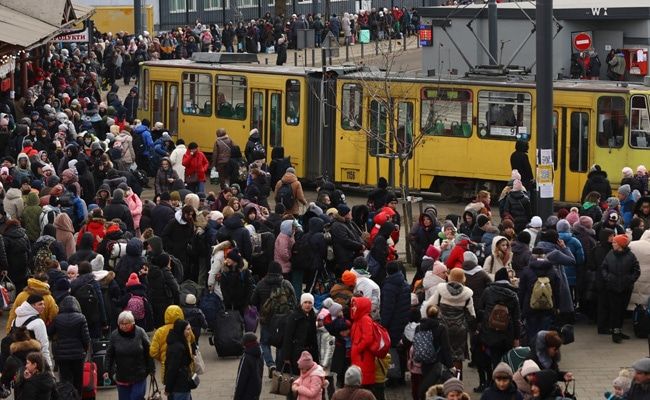
A Reuters article states that U.S. immigration crackdowns under the Trump administration could affect approximately 200,000 Ukrainians currently living in the U.S. under humanitarian programs. Reuters
What’s happening: As the war in Ukraine drags on, many Ukrainians in the U.S. are here under special programs; changes in U.S. enforcement or policy could change their status.
Why it matters: For those people, their legal status, job rights, and sense of security are at stake. For the U.S., how it handles this situation impacts its international reputation, refugee/humanitarian commitments, and internal politics.
Analysis:
• If the U.S. Tightening or removing protections could deter future humanitarian migration or signal a shift in priorities from the “open door” policy.
• Politically, this could lead to opposition from immigrant-rights groups and some lawmakers; those in favor of stricter immigration may applaud it.
• Strategically, this has foreign policy implications: U.S. support for Ukraine encompasses more than military aid—it also includes humanitarian and socio-economic assistance.
• For Ukrainians themselves, uncertainty could impact integration, employment, mental-health outcomes, and community stability.
Note: Immigration status is a behind-the-scenes but crucial aspect of U.S. policy. Ukrainians in the U.S. could become a political/administrative test case for larger policy directions.
10. U.S. averts government shutdown, but damage remains
Although the shutdown ended in November, its impact continues to impact U.S. fiscal, economic, and political aspects. Wikipedia+1
What’s happening: The 43-day shutdown (the longest in U.S. history) furloughed ~900,000 federal employees and disrupted services. This has had lasting economic and political consequences. Wikipedia
Why it matters: Government shutdowns erode trust in governance, disrupt services (including essential services), and cause economic damage. They also signal political disruption, which can impact investor sentiment, public trust, and policy stability.
Analysis:
• The economic damage was estimated at $11 billion in permanent losses. Reuters
• Politically, both Republicans and Democrats bear responsibility; For the administration, managing messaging and the aftermath is crucial.
• The human toll is real for service recipients (federal benefits, grants) and federal employees (pay delays, job insecurity). • The shutdown could impact the next budget cycle: lawmakers will be under pressure to avoid a repeat, but the structural political advantages of a shutdown remain.
Note: The shutdown may be over, but its reverberations remain. Both Americans and markets will be watching to see if the likelihood of such a shutdown diminishes or if it remains a recurring risk.
11. Department of Government Efficiency (DOGE) Dismantled Early
The controversial agency created by Donald Trump to oversee government spending cuts has been quietly abolished eight months ahead of its original schedule. Reuters+2New York Post+2
What’s happening: DOGE was created to centralize efficiency efforts across federal agencies. According to reporting, its functions have been incorporated into other offices and it no longer exists as a separate unit. Reuters
Why this matters: This is important in two ways:
• Symbolic: It suggests that the administration may be backing away from DOGE’s aggressive “shrink government” approach. • Practical: The dissolution raises questions about how, if at all, the promised savings and reforms will be realized.
Analysis:
• The early dismantling of DOGE may reflect an internal recognition that cost-cutting at large federal agencies is more difficult than anticipated.
• Alternatively, it could signal a strategic shift: instead of a public “efficiency czar,” the administration may prefer a less visible mechanism.
• For public-policy watchdogs, this raises concerns about accountability: If the dedicated agency is gone, where will we track performance and savings?
Takeaway: This may seem like an administrative move, but it has profound implications for how this administration pursues reform and restructuring efforts.
12. The public strongly opposes military action in Venezuela.
A new poll shows that nearly 70% of Americans oppose U.S. military action in Venezuela, even as the administration ramps up pressure and labels Maduro’s regime a terrorist organization. The Guardian.
What’s happening: The U.S. has hidden parts of its Venezuela policy under “drug-trafficking interdiction” and anti-terror measures, while publicly talking about major action. The poll shows a gap between the administration’s rhetoric and public sentiment.
Why this matters:
• Foreign-policy legitimacy: If the public isn’t on board, aggressive action abroad risks backlash.
• Domestic politics: Polls could limit how far the administration pursues the military option.
• Strategic risk: Venezuela is a complex theater; Miscalculations could drag the U.S. deeper into costly engagements.
Analysis:
• Public opposition could force the administration to rely more on covert or diplomatic measures rather than overt military strikes.
• Polls show continued wariness among American voters about large-scale foreign intervention after Afghanistan and Iraq.
• On the other hand, military containment or aggression may still persist, but under the radar, raising concerns about accountability.
Significant Note: The Venezuelan government has big dreams, but public sentiment suggests greater caution—a misalignment that could impact both policy and messaging.
13. Manufacturing in the U.S. slowed amid high prices and weak demand.

According to a recent report, U.S. Manufacturing activity in the U.S. fell to a four-month low in November, with new orders declining and inventories rising. Reuters.
What’s happening: The manufacturing PMI (Purchasing Managers’ Index) fell to 51.9 from 52.5 in October. Inventories of finished goods have reached an all-time high. Higher input costs and tariffs are being cited as depressing demand. Reuters+1
Why it matters: Manufacturing remains a key indicator for the economy. A decline in factory production signals challenges for future growth, employment, and overall economic momentum.
Analysis:
• The accumulation of unsold inventory is particularly concerning: it suggests weakening demand ahead of output cuts.
• Tariff policy may be having a greater impact than previously believed: higher input costs reduce margins and increase product prices, harming competitiveness.
• Although services are performing well, the bidirectional nature of the economy (strong services, weak manufacturing) increases the risk of divergence and inequality.
Highlights: The “resilient economy” narrative is showing some cracks. The manufacturing sector may be showing signs of slowing expansion.
14. Treasury Secretary says economy avoided recession despite shutdown.
U.S. Treasury Secretary Scott Bessant said the 43-day government shutdown caused a permanent $11 billion loss to the economy – but he expects the U.S. to avoid recession and sees a strong 2026. Reuters.
What’s happening: The administration is publicly acknowledging the costs of the shutdown, but also pushing a positive narrative for next year’s growth.
Why it’s important: The message is twofold:
• It aims to reassure markets and businesses that the risk of a widespread recession is low.
• It sets expectations for next year’s policy outcomes.
Analysis:
• This expectation may be somewhat political – creating a positive atmosphere ahead of mid-term or next-term evaluations.
• While the shutdown’s losses are sincerely acknowledged, it raises questions about how the losses will be compensated or mitigated.
• Sectors that have performed the worst (such as housing and manufacturing) may remain slow, reducing the potential for further growth.
Highlight: The economy appears to be avoiding a full recession, but underlying weakness remains. Expectations for 2026 are high – which means the path forward matters.
15. Grocery prices: Mixed signals ahead of Thanksgiving.
President Trump has touted lower grocery prices and Walmart’s holiday promotions as signs of victory, but economists warn that food price trends are not uniform and customer experiences vary widely. The Guardian.
What’s happening: Walmart’s announcement that a Thanksgiving meal for 10 people could cost less than US$4 per person was touted as evidence of “winning the price war.” However, the Economist reports that spending could actually be up to 10% higher than last year, depending on store, brand, and region. The Guardian.
Why it matters: Food inflation is a key measure of living expenses. Consumers perceive high prices as impacting sentiment, spending decisions, and political approval ratings.
Analysis:
• The “promotion” narrative is politically helpful, but it may not appeal to a broad spectrum of consumers (e.g., those who purchase brand-name items, or in high-priced areas).
• Analysts emphasize that switching store brands and shopping around can help, but not all households have the same flexibility.
• If inflationary sentiment remains strong, even a small drop in prices may not fully compensate for the loss of spending power caused by inflation.
Highlights: The decline in grocery prices sounds promising, but the evidence is mixed. The real question is whether households feel the relief and adjust their spending patterns accordingly.