
U.S. President Meets Netanyahu, Signals Firm Stance on Middle East Security
Background & Facts (What Happened):
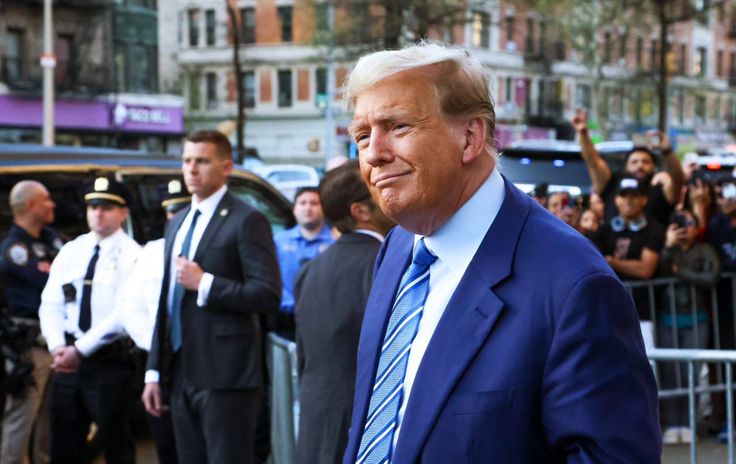
President Donald J. Trump hosted Israeli Prime Minister Benjamin Netanyahu at Mar-a-Lago on Monday, Dec. 29, convening high-profile discussions focused on the fragile Gaza ceasefire, Iran’s regional behavior, and broader U.S.–Israeli strategic cooperation. Following the meeting, Trump publicly urged Hamas to fully disarm and issued a stern warning to Tehran over reported Iranian efforts to rebuild its weapons programs. Netanyahu also announced that Trump will receive the Israel Prize in 2026 — a break from tradition as it is the first time the country’s highest civilian honor will go to a non-Israeli.
Analysis & Impact:
The sit-down underscores Washington’s continuing central role in Middle East diplomacy even as peace prospects remain tenuous. Trump’s dual message — pushing for Hamas disarmament while threatening Iran — reflects a blend of hardline deterrence and political signaling aimed at consolidating U.S. support for Israel’s security priorities. Domestically, the announced award and strong rhetoric bolster the administration among segments of the conservative base, but they may also deepen polarization at home amid protests over U.S. military aid and regional priorities. The exceptionary nature of the Israel Prize announcement may be viewed as symbolic of U.S.–Israel alignment, while simultaneously raising questions about diplomatic norms and public diplomacy.
Expert Insight / Broader Meaning:
Strategically, this encounter signifies that U.S. foreign policy remains deeply engaged in Middle Eastern realignments despite global headwinds. The focus on disarmament and potential military warnings to Iran signals a shift toward coercive diplomacy intertwined with traditional alliance politics. The award itself may be read as a soft power gambit with domestic spin, reinforcing Trump’s image as a peacemaker to key constituencies ahead of the 2026 midterms.
U.S. Military Conducts Another Strike on Suspected Drug-Smuggling Vessel
Background & Facts (What Happened):
U.S. Southern Command reported that U.S. military forces struck a vessel in the eastern Pacific Ocean on Dec. 29, killing two men whom officials described as engaged in narco-trafficking. This marks at least the 30th such operation since early September as part of what the Pentagon dubs “Operation Southern Spear,” a campaign targeting maritime drug trafficking linked to criminal networks. The administration has justified these strikes under an “armed conflict” framework and continues to build up assets in the Caribbean and Pacific in coordination with broader pressure on Venezuelan authorities.
Analysis & Impact:
The escalatory tempo of these strikes reflects a controversial expansion of U.S. military engagement beyond conventional warzones into transnational criminal networks at sea. While presented as a counter-narcotics effort, the operations raise legal and diplomatic questions: critics argue that kinetic military action against unverified targets could contravene international law, risk civilian harm, and complicate relations with regional governments. At home, the strategy is drawing scrutiny from lawmakers across the aisle calling for accountability and oversight. On markets, prolonged unconventional military campaigns risk exacerbating geopolitical risk premiums and could have subtle effects on risk-sensitive assets.
Expert Insight / Broader Meaning:
Operationally, the United States is testing a hybrid security model where drug interdiction and counterterrorism blur. If continuation of such strikes becomes systemic policy, it may set a precedent for future use of force against non-state transnational threats. The broader strategic implication is a redefinition of national security that extends traditional military tools into realms once handled by civilian law enforcement and intergovernmental cooperation.
U.S. Stock Markets Set for Light Trading Amid Year-End Rally

Background & Facts (What Happened):
U.S. stock index futures opened Tuesday with modest movement as the S&P 500 and Dow Jones Industrial Average were poised for strong monthly gains. With the holiday-shortened trading week underway, market volumes are light but indexes have rallied significantly, with the S&P 500 on track for its eighth consecutive month of gains. Technology stocks, including AI-linked equities, saw volatility following recent profit-taking but remain higher on the year.
Analysis & Impact:
The year-end performance reflects sustained investor confidence in key sectors — especially technology and AI — even as broader economic data signals mixed growth trends. Light trading volumes can accentuate swings, making interpretation of near-term price action less predictive of macroeconomic fundamentals. Nonetheless, the extended monthly rally underscores the resilience of U.S. equities, buoyed by strong corporate earnings and optimism around future growth drivers. Given the Fed’s recent rate adjustments and geopolitical uncertainty, market watchers will be closely observing 2026 monetary policy signals and earnings guidance in Q1.
Expert Insight / Broader Meaning:
The uneven but overall bullish market posture highlights investor prioritization of innovation sectors even as economic concerns — including inflation and fiscal policy uncertainty — persist. The evolving narrative suggests that markets are increasingly pricing in sustained AI-driven productivity gains and a transition toward long-term growth paradigms centered on advanced technology.
Record Temperature Swings Challenge Eastern U.S. Infrastructure and Winter Safety
Background & Facts (What Happened):
Parts of the Eastern United States experienced a rapid and dramatic shift from record-setting warmth to an incoming arctic blast expected to plunge temperatures well below average through New Year’s Eve. Cities in the Midwest and Northeast are bracing for dangerous winter weather, including hazardous travel conditions, snowfall, and potential black ice. Emergency weather advisories have been issued as local authorities mobilize for the abrupt change.
Analysis & Impact:
The extreme temperature volatility illustrates the growing challenges that climate change poses to emergency planning and infrastructure resilience. Such swings place strain on power grids, transportation networks, and public safety systems. For utilities, sudden heating demands followed by intense cold can expose grid vulnerabilities and hike energy costs for consumers. Travel disruptions during a peak holiday period have economic ripple effects, from lost productivity to increased costs for freight and logistics.
Expert Insight / Broader Meaning:
Outlier weather events are increasingly becoming the norm as climate patterns shift, underscoring the need for robust adaptation strategies across sectors. Urban planners and policymakers will need to integrate more dynamic climate models into infrastructure design norms to accommodate abrupt and severe weather fluctuations. The public discourse around climate risk is also likely to intensify as citizens experience the tangible consequences of climate extremes.
Chinese Military and Commercial Advances in the Arctic Prompt U.S. Security Concerns
Background & Facts (What Happened):
China’s expanding activities in the Arctic — including under-ice submarine missions and dual-use scientific research — are prompting alarm among U.S. defense planners and NATO allies. While Beijing frames its presence as scientific, U.S. officials see these missions as enabling deeper strategic reach, potentially facilitating quicker naval access between the Pacific and Atlantic. China’s icebreaker fleet growth and undersea mapping efforts are viewed as part of a comprehensive strategy to secure Arctic routes and resources.
Analysis & Impact:
The Arctic is emerging as a critical front in geopolitical competition. China’s expanding footprint challenges historical dominance by the United States and NATO in the region. Arctic waterways are becoming increasingly navigable due to climate change, and control over these routes could reshape global shipping, resource extraction economics, and military postures. For the U.S., this necessitates bolstered surveillance, expanded military readiness, and enhanced cooperation with Arctic partners like Canada and the Nordic states.
Expert Insight / Broader Meaning:
Beijing’s Arctic push reflects a broader strategy of leveraging scientific and commercial missions to secure strategic advantage — akin to its approach in the South China Sea. Long-term competition in the High North will likely define future power balances, making Arctic policy an essential consideration in U.S. defense and foreign affairs planning.
Pentagon Announces $8.6 Billion F-15 Fighter Jet Contract for Israel

Background & Facts (What Happened):
The U.S. Department of Defense announced a major contract valued at $8.6 billion awarded to Boeing for the production and delivery of advanced F-15IA fighter jets to the Israeli Air Force. The foreign military sale, conducted through the Pentagon’s procurement process, will take place over the next decade and enhances Israel’s air combat capabilities.
Analysis & Impact:
The approval of this significant arms deal reinforces the longstanding security partnership between the United States and Israel. For Boeing, the deal secures long-term manufacturing activity and employment, while strengthening industrial ties between the U.S. and a key Middle Eastern ally. However, such military sales are politically sensitive domestically, as segments of the U.S. public and legislators have expressed concern over perpetual arms transfers amid ongoing conflicts in the Middle East.
Expert Insight / Broader Meaning:
From a strategic perspective, sustained U.S. arms support for allies like Israel underpins deterrence postures in volatile regions. Yet it also situates American defense production at the nexus of foreign policy and diplomacy — a role that may face increased scrutiny as global conflicts evolve and public opinion shifts. Continued investment in allied air forces signals a durable preference for forward defense collaborations.
Federal Reserve Signals Caution as Inflation Progress Stalls
Background & Facts (What Happened):
Senior Federal Reserve officials signaled renewed caution this week after updated economic data showed inflation easing more slowly than projected in the final quarter of the year. While headline inflation has moderated from earlier peaks, core services inflation remains sticky, driven by housing costs and wage pressures. Fed Chair Jerome Powell reiterated that future interest-rate decisions will remain “data-dependent,” pushing back against market expectations of rapid rate cuts in early 2026.
Analysis & Impact:
The Fed’s stance tempers investor optimism that borrowing costs will fall quickly. Higher-for-longer rates could constrain housing demand, corporate investment, and consumer credit growth in the first half of next year. However, policymakers are wary of loosening too soon and reigniting inflationary pressures. The Fed’s communication strategy reflects an effort to preserve credibility while balancing recession risks. Globally, U.S. rate policy continues to influence capital flows, currency valuations, and emerging-market stability.
Expert Insight / Broader Meaning:
The central bank appears committed to managing expectations rather than markets. This episode underscores a broader shift away from ultra-loose monetary policy toward a structurally tighter financial environment that may redefine economic growth patterns for the rest of the decade.
Supreme Court Weighs Major Case on Federal Agency Authority
Background & Facts (What Happened):
The U.S. Supreme Court heard arguments in a closely watched case challenging the scope of authority held by federal regulatory agencies. At issue is whether agencies can continue to interpret ambiguous statutes without explicit congressional authorization. The case has implications for environmental regulation, labor rules, and consumer protection enforcement.
Analysis & Impact:
A ruling that curtails agency authority could significantly reshape governance in Washington, shifting power back to Congress and the courts. Businesses argue the change would reduce regulatory uncertainty, while critics warn it could weaken protections across health, safety, and environmental domains. The decision could also complicate enforcement of existing laws passed decades ago but adapted through agency interpretation.
Expert Insight / Broader Meaning:
This case reflects a broader conservative legal movement aimed at reining in the administrative state. Regardless of the outcome, the ruling will influence how future legislation is written and how effectively the federal government can respond to emerging challenges.
U.S. and European Allies Coordinate New Sanctions Framework on Russia
Background & Facts (What Happened):
U.S. officials confirmed ongoing coordination with European partners on a revised sanctions framework targeting Russian financial institutions and energy logistics networks. The effort aims to close loopholes that have allowed Moscow to maintain revenue streams despite existing restrictions.
Analysis & Impact:
Sanctions enforcement fatigue has become a growing concern among Western governments. Tighter coordination may strengthen economic pressure on Russia, but it also risks secondary impacts on global energy markets and inflation. The move signals sustained transatlantic unity, even as domestic political pressures mount in several allied countries.
Expert Insight / Broader Meaning:
The persistence of sanctions highlights the long-term nature of economic warfare in modern geopolitics. Rather than quick results, policymakers are increasingly focused on gradual constraint and strategic endurance.
Pentagon Expands Cyber Defense Initiative Against State-Backed Threats

Background & Facts (What Happened):
The Department of Defense announced expanded funding for cyber defense programs aimed at countering state-backed hacking groups linked to China, Russia, and Iran. The initiative includes public-private partnerships with critical infrastructure providers and technology firms.
Analysis & Impact:
Cybersecurity has become a frontline national security concern, with attacks increasingly targeting energy grids, hospitals, and financial systems. The expanded initiative reflects recognition that deterrence in cyberspace requires resilience as much as retaliation. Businesses may face new compliance requirements but also benefit from improved threat intelligence sharing.
Expert Insight / Broader Meaning:
This move reinforces the idea that future conflicts may be fought as much through networks and data as through conventional weapons. Cyber defense is no longer a niche capability but a core pillar of national security strategy.
Major Tech Firms Accelerate AI Investment Despite Regulatory Scrutiny
Background & Facts (What Happened):
Leading U.S. technology companies announced fresh investments in artificial intelligence infrastructure, including data centers and proprietary models, even as lawmakers continue debating AI regulation. Executives argue the spending is necessary to remain competitive globally.
Analysis & Impact:
The AI investment surge highlights the sector’s confidence in long-term returns but also intensifies concerns about market concentration, energy consumption, and workforce displacement. Regulators face pressure to balance innovation with safeguards, particularly around data privacy and algorithmic accountability.
Expert Insight / Broader Meaning:
AI is increasingly viewed as foundational infrastructure rather than a speculative technology. The companies that dominate this phase may shape economic productivity and geopolitical power for years to come.
U.S. Labor Market Shows Cooling Without Sharp Job Losses
Background & Facts (What Happened):
Recent labor data indicates slowing job growth and reduced hiring momentum, while unemployment remains historically low. Wage growth has moderated, easing some inflationary pressure without triggering widespread layoffs.
Analysis & Impact:
The data suggests the economy may be achieving a “soft landing,” though risks remain. Slower hiring could dampen consumer spending, but stable employment supports household confidence. Policymakers view the trend as cautiously encouraging.
Expert Insight / Broader Meaning:
The labor market’s gradual recalibration supports the case for careful policy adjustments rather than abrupt intervention, reinforcing the Fed’s cautious stance.
Corporate Bankruptcies Rise as Debt Costs Remain Elevated
Background & Facts (What Happened):
U.S. bankruptcy filings increased among mid-sized firms, particularly in retail and commercial real estate, as higher interest rates strain balance sheets. Many companies that borrowed heavily during the low-rate era are now facing refinancing challenges.
Analysis & Impact:
While the trend has not yet spread systemically, it highlights vulnerabilities in sectors sensitive to credit conditions. Banks are tightening lending standards, which could further pressure marginal firms but strengthen financial stability overall.
Expert Insight / Broader Meaning:
The rise in bankruptcies reflects the delayed consequences of monetary tightening. Economic normalization often involves redistribution of capital toward more productive uses.
Congress Advances Infrastructure Funding Extension

Background & Facts (What Happened):
Congress moved forward with an extension of funding for major infrastructure projects, including highways, bridges, and broadband expansion. Lawmakers cited strong demand from states and municipalities as justification for continued investment.
Analysis & Impact:
Infrastructure spending supports employment and long-term productivity but adds to fiscal pressures amid rising deficits. The bipartisan support suggests recognition that physical and digital infrastructure remain central to competitiveness.
Expert Insight / Broader Meaning:
Sustained infrastructure investment signals a strategic shift toward long-term national resilience rather than short-term stimulus politics.
Energy Transition Accelerates as Utilities Expand Renewable Capacity
Background & Facts (What Happened):
U.S. utilities reported record additions of solar and wind capacity in 2025, alongside increased investment in battery storage. Federal tax incentives and state-level mandates have accelerated deployment.
Analysis & Impact:
The expansion strengthens energy security and reduces emissions but also raises challenges around grid integration and permitting delays. Traditional energy producers face mounting pressure to adapt or diversify.
Expert Insight / Broader Meaning:
The U.S. energy transition is moving from aspiration to execution. How effectively the grid adapts will determine whether climate goals align with economic and security priorities.