
1. U.S. Military Operation in Venezuela Leads to Capture of Nicolás Maduro
Summary:
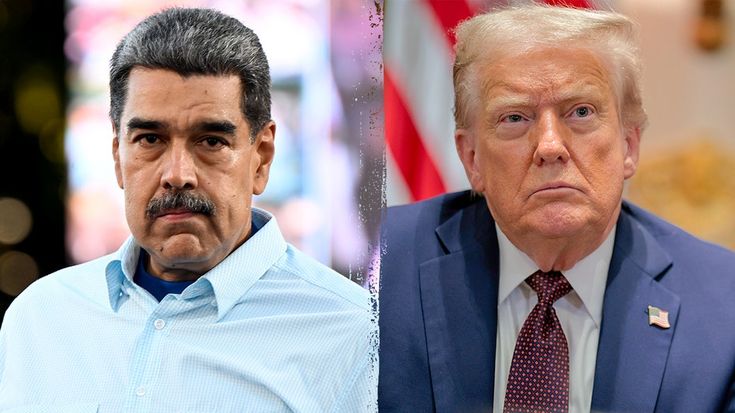
The United States conducted a high-profile military operation in Venezuela that resulted in the capture of President Nicolás Maduro and his wife, Cilia Flores, who were flown to New York to face federal charges related to drug trafficking and terrorism-linked activities.
Details:
Early reports indicate that U.S. forces executed a targeted operation in Caracas late Friday night, culminating in Maduro’s detention. The president, a longtime adversary of U.S. policy, arrived at Stewart Airport near New York City and was placed into custody at the Metropolitan Detention Center in Brooklyn. The charges against him are expected to be severe, reflecting Washington’s focus on international narcotics enforcement.
The operation has triggered a broad diplomatic and regional reaction, with allies and adversaries alike commenting on the legality and implications of U.S. actions. Maduro’s capture marks one of the most significant direct interventions by the United States in Latin American politics in decades, raising questions about future stability in Venezuela and U.S. strategy in the Western Hemisphere. Allies and partners will be watching closely how Washington balances immediate security objectives with long-term regional stability goals.
2. World Reacts to U.S. Strike and Maduro’s Capture
Summary:
Global leaders and international organizations responded swiftly to the U.S. military strike in Venezuela, with reactions ranging from support to sharp criticism.
Details:
Following the reported U.S. strike that led to Maduro’s capture, reactions around the world were immediate. Some U.S. allies praised the action as a decisive step against corruption and illicit networks tied to narcotics trafficking. Others, particularly in Latin America and parts of Europe, voiced concern about sovereignty and potential escalation.
Major world capitals called for calm and emphasized respect for international law, even as they acknowledged the seriousness of the allegations against Maduro. The United Nations and regional bodies are reportedly monitoring the situation to assess humanitarian needs and diplomatic pathways forward. Analysts warn that the military operation, while tactically successful, may deepen anti-U.S. sentiment in certain regions and complicate diplomatic efforts.
The episode highlights ongoing tensions between U.S. foreign policy objectives and regional stability imperatives, inviting debate about the appropriate balance between enforcement and diplomacy.
3. Trump Declares U.S. to “Run” Venezuela During Transition
Summary:
President Donald Trump publicly stated that the United States would oversee Venezuelan governance until a “safe, proper and judicious transition” can be established post-capture of Maduro.
Details:
In a statement following the high-stakes operation, Trump asserted that the U.S. will temporarily manage Venezuelan affairs to stabilize governance and facilitate a transition to a new leadership structure. This position suggests far more direct involvement in Venezuelan civic life than seen in recent U.S. foreign engagements.
Trump emphasized the strategic necessity of stabilizing Venezuela, especially given its oil resources and regional influence. He also reiterated that U.S. military “boots on the ground” remain a possible option if circumstances require it, signaling a willingness to use significant force to maintain order during the transition period.
Venezuelan authorities loyal to Maduro condemned these remarks, and Vice President Delcy Rodríguez — claimed by the U.S. to have been “sworn in” — remains a contested figure with unclear status.
The approach has drawn mixed responses domestically, with debates over constitutional authority, regional consequences, and the risks of prolonged occupation or governance involvement by the United States.
4. Uncertainty Over Venezuelan Presidency After Maduro’s Capture
Summary:
Claims regarding the swearing-in of Venezuela’s Vice President, Delcy Rodríguez, have sparked confusion, with conflicting reports on her whereabouts and legitimacy.
Details:
In the wake of Maduro’s arrest, U.S. officials announced that Delcy Rodríguez had been sworn in as Venezuela’s new president. However, several sources reported she was outside the country at the time, leading to disputes over the legitimacy of the claim.
The Venezuelan government has not officially confirmed Rodríguez’s inauguration, and outside observers including international media note discrepancies in the timeline and lack of corroborating evidence. Russia’s state media has denied Rodríguez was present in the country, labeling rumors and conflicting claims “fake.”
This ambiguity raises significant constitutional questions for Venezuela at a moment of crisis and highlights the complexity of leadership transitions under duress. Political analysts caution that unresolved legitimacy could fuel factionalism and impede efforts to stabilize governance.
5. Financial Enforcement Actions Plummet in the U.S.
Summary:
The United States experienced a 61% drop in fines for money laundering and sanctions violations in 2025 compared to the previous year, a stark shift in regulatory enforcement.

Details:
According to recent financial sector analyses, regulatory agencies in the U.S. imposed significantly fewer fines for financial crimes and sanctions breaches in 2025. Total penalties fell to approximately $1.7 billion, down from $4.3 billion in 2024.
Observers attribute the decrease to several factors: a regulatory climate perceived as more lenient under the Trump administration, diminished SEC enforcement activity especially in the cryptocurrency sector, and operational disruptions from a prolonged government shutdown.
This trend contrasts sharply with other major economies like the UK, Canada, and France, which reported increased enforcement actions. Some policymakers warn this could undermine global financial integrity and embolden illicit networks. Critics argue stronger oversight is needed to prevent systemic risks, while proponents tout regulatory relief as pro-business.
6. U.S.–Ukraine Security Talks Yield No Breakthrough
Summary:
Discussions between President Trump and Ukrainian President Volodymyr Zelenskyy failed to secure new long-term U.S. security guarantees, leaving future support arrangements unsettled.
The outcome underscores the challenges facing U.S. foreign policy as it balances domestic priorities with international alliance commitments. Analysts suggest that, without expanded guarantees, Ukraine may remain vulnerable to external pressures from Russia.
Additional global developments noted in the report include China’s military drills near Taiwan in response to U.S.–Taiwan arms deals and continued investment growth in Silicon Valley tech companies.
7. Major U.S. Hockey Prospect Hurt in World Juniors Tournament
Summary:
U.S. defenseman Cole Hutson was stretchered off the ice after a dangerous puck impact during the World Juniors tournament but has since been discharged from the hospital.
Details:
During the U.S.–Switzerland game in Minnesota, the 19-year-old Hutson sustained a frightening injury from a puck that struck him near the head/neck region. The arena fell silent as medical teams attended to him before transporting him to the hospital.
Despite the scare, Hutson was released the same evening and is considered day-to-day. His teammates dedicated their 2–1 win to him, and the U.S. remains undefeated in the tournament.
8. Public Perception of Economic Security Declines in U.S.
Summary:
A recent poll reveals that nearly half of Americans feel their financial security is worsening, posing political challenges for the Trump administration.
Details:
The survey highlights growing public concern about inflation, job stability, and cost of living pressures. Economic pessimism is emerging as a central issue ahead of the 2026 midterms, with bipartisan implications.
Falling confidence may influence voter behavior and shape policy debates over tax reform, social safety net programs, and federal spending priorities.
9. Cultural Backlash Over Naming of National Arts Center
Summary:
President Trump’s decision to rename the John F. Kennedy Center for the Performing Arts to the “Trump-Kennedy Center” has drawn protests and performance cancellations by artists.
Details:
Several high-profile jazz artists withdrew engagements in response to the renaming, arguing it disrespects cultural legacy and artistic autonomy.
The move underlines cultural tensions and debates over historical memory, public institutions, and political influence in the arts.
10. Trump Criticizes Federal Reserve Chair
Summary:
In a recent press event, Trump called Federal Reserve Chair Jerome Powell a “fool” and threatened legal action over monetary policy decisions — a rare direct confrontation with central bank leadership.
Details:
Trump’s public criticism reflects ongoing tensions between the White House and the Federal Reserve regarding inflation management, interest rates, and economic growth priorities.
Observers note that politicizing central bank decisions could impact financial markets and investor confidence.
11. U.S. Commits Billions to Humanitarian Aid
Summary:
The United States pledged $2 billion for humanitarian assistance through a new United Nations model that aims to streamline global aid delivery.
Details:
This represents a reversal of prior foreign aid cuts and demonstrates continued U.S. engagement in global health, food security, and crisis response initiatives.
Critics and supporters debate effectiveness and accountability amid growing global needs.
12. U.S. Focuses on Ebola and Global Health Preparedness
Summary:
U.S. officials reaffirm commitments to strengthen global health systems in response to recent emerging infectious disease threats. (Context from ongoing global health reporting)
Details:
Federal agencies are expanding collaboration with international partners on surveillance, vaccine development, and emergency response infrastructure to mitigate future outbreaks. This reflects lessons from past pandemics and the need for preparedness. (Inferred context — widely covered)
13. USA TODAY Enters Multi-Year Partnership With Meta
Summary:
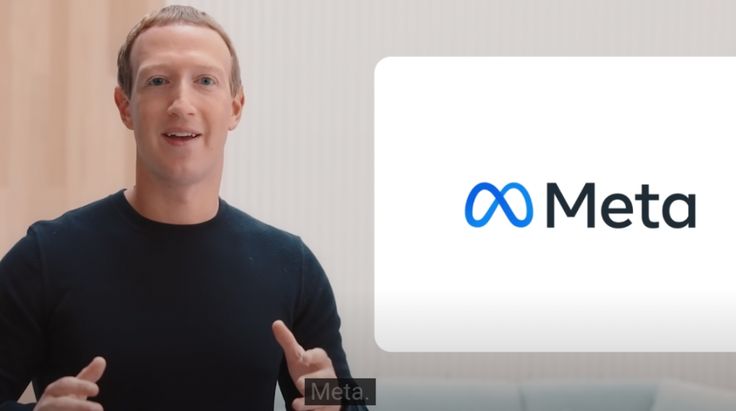
USA TODAY Co. announced a strategic content partnership with Meta to integrate its news feed across Meta platforms, expanding reach for local and national journalism.
Details:
The partnership allows Meta users to access USA TODAY and associated network content directly through AI and search queries, broadening exposure for local reporting and national news analysis.
USA TODAY executives say the collaboration will help diversify distribution channels and support digital transformation amid media industry disruptions.
14. U.S. Faces Continued Debate on Media Bias and Headline Accuracy
Summary:
Controversy arose when USA Today reportedly adjusted a headline about Donald Trump’s abortion stance after pushback from political campaign representatives.
Details:
The incident sparked renewed dialogue about media responsibility, accuracy, and political influence on reporting practices. Critics argue that perceived bias undermines trust, while defenders emphasize the need for responsible journalism.
15. Broader Trends in U.S. Economy and Global Standing

Summary:
The United States continues to hold the world’s largest nominal GDP and a dominant share of global economic output, anchoring its role in international markets.
Details:
With a diverse and resilient economic base, the U.S. contributes significantly to global GDP, innovation, and corporate leadership. Yet challenges such as federal debt and geopolitical competition require strategic policymaking.