1. Understanding How the Stock Market Works

Before entering the stock market, a trader must fully understand how it functions. The stock market is a marketplace where shares of companies are bought and sold, and when you purchase a share, you become a partial owner of that company. The value of your ownership continuously changes because prices move up or down based on supply and demand. When more people buy a stock, its price rises; when more people sell, its price falls. This constant fluctuation creates opportunities for profit, but also introduces risk for those who are unprepared. Understanding basic market terms such as equity, index, exchange, bid-ask price, market order, and stop-loss gives traders clarity and confidence while trading. Without these basics, traders often rely on emotional decisions rather than analysis, which leads to losses. Many new traders enter the markets quickly without this foundation and lose money early. Experienced traders always emphasize that learning how the market operates is the first and most valuable investment. Understanding the stock market also helps you evaluate whether a company is worth investing in, whether the price is fair, and whether the opportunity fits your financial goals, making this knowledge a fundamental requirement for all traders.
2. Importance of Supply and Demand in Price Movement
Price movement in the stock market is governed by simple economic principles: supply and demand. When there are more buyers than sellers, stock prices rise because more people are willing to pay higher prices. When sellers outnumber buyers, prices fall, reflecting decreasing interest. Understanding this dynamic allows traders to interpret market psychology and identify market strength or weakness. Traders who master this concept can analyze price charts more accurately because every candle reflects the balance between buying and selling pressure. For example, a stock forming higher highs and higher lows indicates a strong uptrend supported by high demand. Conversely, lower highs and lower lows suggest continuous selling pressure, indicating a downtrend.
A sideways market represents market indecision, where neither buyers nor sellers dominate.Traders who recognize these phases avoid entering at emotional or irrational moments. Instead, they wait for favorable conditions before making decisions. When traders use supply and demand zones to identify support and resistance, they gain better entry accuracy and minimize false signals. Understanding supply and demand eliminates guesswork and gives traders the ability to see price reactions in real time rather than relying solely on lagging indicators.
3. Learning Key Market Terminology
A trader must understand core market terminology before placing real trades. Essential words like equity, trading account, exchange, volume, index, market order, stop-loss, and bid-ask price carry deep significance. For example, an “exchange” refers to the platform where trades occur, while “volume” indicates how many shares are bought or sold in a specific time frame, giving insight into the strength of the price move. “Bid-ask pricing” helps traders understand how much buyers are willing to pay and how much sellers want in return, forming the real market price. A “stop-loss” protects a trader’s capital by automatically closing a trade when losses reach a predefined point.
Without knowledge of such terms, traders make guesses rather than informed decisions. Understanding terminology gives structure to learning technical analysis, chart interpretation, and trading strategies. It also boosts confidence, eliminates confusion, and helps traders communicate clearly when discussing markets. Learning market vocabulary also makes reading financial reports, broker communications, and market news easier. In short, strong vocabulary is not optional—it is the language of trading and essential for survival and long-term success.
4. Choosing the Right Trading Style
Not every trader is suited to every style, which is why selecting the right trading method is critical. Trading styles range from scalping, day trading, swing trading, and long-term investing—each with its own pace, risk profile, and psychological demands. Scalping involves multiple trades within seconds or minutes and requires extremely fast decision-making, emotional control, and real-time market tracking. Day trading involves buying and selling within the same trading day, aiming to capitalize on intraday price movements. Swing trading is slower, with trades lasting several days or weeks, allowing analysis with less emotional pressure.
Long-term investing involves holding positions for months or years and benefits from company growth and large market trends. Selecting a suitable style depends on your personality, lifestyle, and schedule. For example, someone with a full-time job may struggle with day trading but can succeed in swing trading. Choosing a compatible style helps traders maintain discipline, consistency, and emotional balance. When the trading style matches personal strengths, the trader operates confidently, avoids unnecessary stress, and improves long-term performance.
5. The Power of Price Action Analysis
Price action analysis focuses on reading the chart itself rather than relying heavily on technical indicators. Traders analyze candlestick patterns, market structure, trend direction, and support and resistance zones to understand market psychology. Candles show how buyers and sellers behave at specific price levels—long bullish candles show strong buying interest, while long wicks indicate rejection zones where price failed to break through. Price action allows traders to understand market sentiment in real time and identify high-probability trade setups. For example, breakouts from consolidation zones often signal the start of new trends, while pullbacks in an uptrend offer lower-risk buying opportunities.
Price action also helps traders determine stop-loss placement and profit targets based on recent swing highs or lows. Unlike lagging indicators, price action gives immediate insight because it reflects current market decisions. It is applicable across all markets—stocks, forex, commodities, crypto—and at all timeframes. Mastering price action makes traders more independent and reduces reliance on unnecessary indicators, giving them clarity and speed in decision-making.
6. Identifying Market Trends Effectively
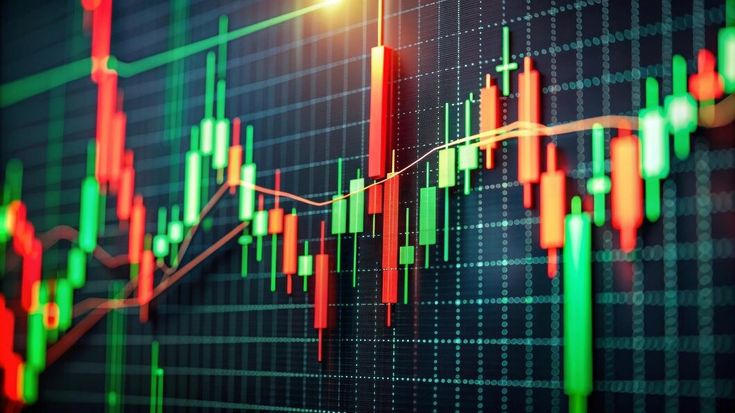
Trend identification is one of the most valuable skills in trading. A trend shows the overall direction of market movement—upward, downward, or sideways. When the market makes higher highs and higher lows, it reflects an uptrend dominated by buyers. When the market forms lower highs and lower lows, sellers dominate, and the trend moves downward. In a sideways market, neither side is in control, and price fluctuates within a range. Recognizing trend directions helps traders take trades aligned with market momentum rather than against it. Most losses occur when traders buy during strong downtrends or sell during healthy uptrends.
Identifying trends early helps traders enter positions at strategic points, such as on pullbacks or trendline touches, improving accuracy and minimizing risk. Traders can also use trends to avoid emotional decisions—for example, not exiting a profitable trade prematurely during a strong trend. Trend analysis builds discipline and teaches traders to follow the market rather than fight it. Mastering trend interpretation transforms trading into a structured decision-making process instead of emotional reacting, giving traders long-term consistency and profitability.
7. Importance of Support and Resistance
Support and resistance levels represent zones where the market repeatedly reacts. Support is where price stops falling and buyers enter strongly, while resistance is where price stops rising and sellers step in. These levels are crucial because they provide logical areas for placing entries, stop-losses, and profit targets. For example, buying near support during an uptrend gives traders a low-risk opportunity with high potential reward. Similarly, selling near resistance during a downtrend provides safer entries. Support and resistance also act as psychological barriers—if a strong resistance breaks, it often becomes new support as buyers take control.
These levels also help traders avoid fake breakouts by waiting for confirmations. Professional traders use support and resistance as the foundation of their trading strategies because they clearly reflect real supply and demand activity. When combined with price action, these levels offer reliable signals without complicated indicators. Their simplicity, accuracy, and universal relevance make them essential tools for new and experienced traders alike.
8. Developing a Complete Trading Plan
A trading plan is a structured blueprint that outlines exactly how a trader will operate in the market. It includes entry rules, exit strategies, risk levels, position sizing, preferred timeframes, stock selection criteria, and personal financial goals. A trading plan helps eliminate confusion during live market decisions, preventing emotional and impulsive trading. For example, a plan may require trades only in the direction of the current trend, entries only after confirmed breakouts, and risk per trade limited to 1% of total capital. When a plan is followed consistently, traders gain discipline and measurable performance. The plan also helps traders review results, track progress, and improve strategies.
A trading plan transforms trading from gambling into structured business activity. Without a plan, traders act based on emotions or random market noise, often resulting in losses. With a plan, traders develop confidence, avoid uncertainty, and approach trading logically rather than emotionally, giving them long-term survival and success.
9. Importance of Stop-Loss in Every Trade
Stop-loss is one of the most important tools in trading because it protects capital from unexpected market reversals. No strategy is perfect, and every trader experiences losing trades. A stop-loss automatically closes a position when the price moves beyond a predefined limit, preventing a small loss from becoming a major disaster. Traders may set stop-losses based on swing highs/lows, percentage risk, or market volatility indicators like ATR. Using stop-losses ensures that even after a series of losing trades, the trading account remains intact and recoverable. Without stop-loss discipline, traders risk losing weeks or months of profits in a single bad trade.
Professional traders prioritize capital preservation above everything else. Their goal is not to never lose but to control losses when they occur. Stop-losses also provide psychological peace—once placed, traders no longer fear watching the chart constantly. By reducing emotional involvement, stop-loss helps maintain rational decision-making and fosters consistency in trading performance.
10. Mastering Risk Management

Risk management is the backbone of profitable and long-lasting trading. Even with the best strategy, traders who risk too much eventually lose everything. Professional traders usually risk only 0.5% to 2% of their capital per trade. This controlled risk ensures that several consecutive losses do not destroy the trading account. Risk management involves position sizing, stop-loss placements, risk-reward calculation, maximum daily loss limits, and emotional discipline. A good risk-reward ratio such as 1:2 or 1:3 ensures that winning trades cover multiple losses. Position sizing determines how many shares to trade depending on account size and risk.
Emotional discipline ensures that traders do not increase size after losses or chase the market. With solid risk management, trading becomes predictable, consistent, and financially stable. It transforms trading from gambling into a professional process. Traders who master risk management survive market volatility and continue trading even after setbacks, making it the most important skill in the journey to long-term success.
11. Role of Emotional Discipline in Trading
Trading is as much psychological as it is technical. Emotions like fear, greed, overconfidence, and revenge trading often lead to poor decisions. Emotional discipline means sticking to the plan, refusing to overtrade, and accepting losses calmly. For example, fear can prevent traders from entering valid trades, while greed can make them hold positions longer than necessary. Overconfidence can lead to oversized positions, increasing risk unnecessarily. Emotional control develops through experience, journaling, and structured trading systems. Traders with emotional discipline only enter trades that meet their strategy rules, exit based on signals—not emotions—and never increase risk irrationally.
With emotional discipline, traders make decisions logically rather than impulsively. This maturity separates profitable traders from beginners. It allows long-term survival even in volatile markets and ensures that small mistakes do not turn into devastating financial losses.
12. The Value of Paper Trading
Paper trading is a simulation of real trading using virtual money. It allows new traders to practice strategies without risking real capital. In this phase, traders learn chart reading, order placement, price movements, and emotional responses without fear of losing money. Paper trading helps identify recurring mistakes and develop confidence. It also lets traders test strategies over time to see which ones work consistently. Maintaining a record of simulated trades—including reasons for entry and exit—helps analyze performance. Paper trading is similar to a flight simulator for pilots:
it prepares traders for real markets. Once profitable consistently in virtual trading, traders can move to real money gradually. Even advanced traders use demo accounts to test new markets and strategies. Taking paper trading seriously reduces fear, enhances analysis skills, and builds strong psychological habits that are essential for real-world trading success.
13. Tracking Market News and Economic Events
Markets react sharply to global news, economic data, and corporate announcements. Central bank interest rates, inflation numbers, quarterly earnings, geopolitical conflicts, and mergers can all cause major volatility. Even the best technical setups can fail during these periods. This is why traders must track economic calendars, news reports, and scheduled data releases. Knowing what events are coming helps traders avoid entering risky trades before announcements or adjust their existing positions. For example, taking large trades before an interest rate decision is risky unless the strategy is news-based.
Being aware of news also helps traders interpret price moves correctly—sometimes a sudden price drop is temporary panic rather than true fundamental weakness. Combining news awareness with technical analysis gives traders a complete view of the market. It prevents random decisions and helps protect capital during unpredictable conditions. Informational awareness is not optional—it is a core part of responsible trading.
14. The Importance of Trading Journals

A trading journal is a powerful tool for continuous improvement. It includes details of every trade: entry price, exit price, reasons for entering, stop-loss placement, emotional state, and market conditions. Keeping a journal allows traders to analyze performance objectively. By reviewing past trades, patterns become visible—such as repeated emotional trades, early exits, or ignoring stop-loss rules. Traders learn what works and what doesn’t. Over time, the journal becomes a personalized textbook of market lessons. Journaling also promotes accountability and discipline since traders must justify every decision. It prevents the repetition of mistakes and accelerates growth.
Most professional traders and fund managers maintain journals because without recorded data, improvement is based on memory rather than facts. Journaling transforms trading into a measurable process and helps traders refine strategies, improve risk management, and remove emotional decision-making step by step.
15. Starting Small and Growing Gradually
Starting small protects traders from emotional stress and financial damage. With small trade sizes, early mistakes cost little and become valuable learning experiences. As skill improves, traders can gradually increase position size. Growing step by step builds emotional stability—traders learn to handle losses calmly and avoid panic. Increasing size too quickly often leads to fear, overreaction, and large losses. Trading is not a race—it is a lifelong journey requiring patience, discipline, and continuous learning. Markets constantly evolve, and traders must adapt.
Reading market books, analyzing charts, staying updated on news, and reviewing journals builds professional growth. A trader who starts small and grows gradually develops a strong psychological foundation, learns efficient risk control, and becomes financially consistent. This disciplined approach turns trading from a gamble into a structured career and increases the probability of long-term success.
About the Author