
1. Establishment of the National AI Grid
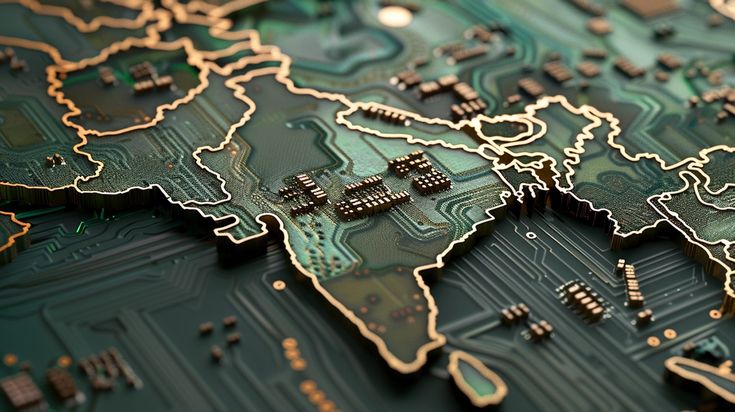
By 2030, India will complete the National AI Grid, an advanced digital infrastructure uniting supercomputing centers, massive data repositories, and research laboratories across the nation. This interconnected ecosystem will provide scalable, secure, and affordable AI resources to startups, industries, and researchers. The AI Grid will function like a digital power grid—delivering computational energy and data intelligence nationwide. It will empower innovators with access to high-performance computing (HPC) clusters capable of processing massive datasets and training complex models. This network will reduce India’s reliance on foreign cloud services and promote cost-effective, sovereign AI development. By standardizing data formats and resource-sharing protocols, the Grid will accelerate breakthroughs in various sectors—ranging from healthcare and agriculture to manufacturing and education. Ultimately, the National AI Grid will be the backbone of India’s AI revolution, ensuring inclusive access to world-class digital infrastructure for every region.
2. Integration of Quantum Computing and 6G Connectivity
India’s AI ecosystem will be supercharged by quantum computing and 6G networks, forming the technological foundation for next-generation intelligence systems. Quantum processors will perform complex simulations, cryptographic operations, and optimization tasks far beyond classical computing capabilities. Meanwhile, 6G will provide ultra-fast, low-latency data transfer, enabling real-time AI applications in autonomous vehicles, telemedicine, and robotics. The synergy between quantum and 6G technologies will make distributed AI systems highly responsive and efficient, even in remote areas.
This will also enable seamless collaboration between cloud and edge computing environments. By integrating these technologies into national infrastructure, India will achieve exponential growth in computing capacity, supporting AI innovations that rely on instantaneous data exchange and massive model training. Together, they will empower industries to perform real-time decision-making and predictive analytics, positioning India at the forefront of global AI-powered digital transformation.
3. Expansion of AI-Optimized Data Centers
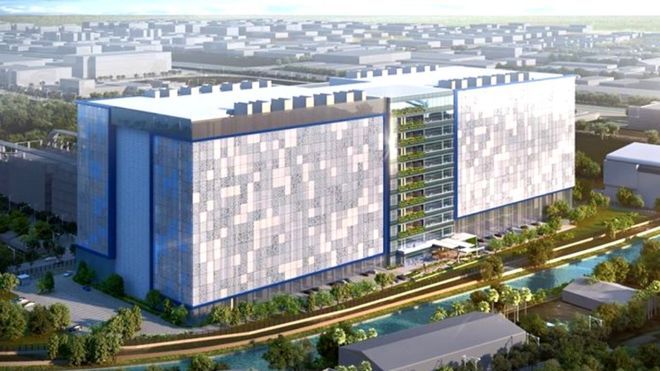
To sustain large-scale AI development, India will establish a network of AI-optimized data centers across key states—Telangana, Gujarat, Karnataka, and Tamil Nadu. These facilities will feature high-performance GPUs, liquid-cooling systems, and renewable energy integration to minimize environmental impact. Data centers will act as the operational heart of the National AI Grid, enabling large-scale data analysis, model training, and real-time analytics. Edge data centers will be deployed in Tier-2 and Tier-3 cities, ensuring low-latency access to AI infrastructure for local enterprises.
This distributed model will foster regional innovation ecosystems and support localized AI research. By integrating sustainable practices such as solar-powered cooling and energy-efficient chips, these centers will balance performance with environmental responsibility. Collectively, India’s data center expansion will create a resilient digital foundation capable of supporting national-scale AI initiatives and international technology partnerships.
4. Digital India 2.0 – AI-Driven Governance Framework
The Digital India 2.0 initiative will evolve into an AI-powered governance framework, embedding intelligent systems into the country’s public administration. AI-driven analytics will guide policy decisions, optimize welfare distribution, and streamline government services. Real-time dashboards will track social welfare programs, health metrics, and environmental indicators, allowing data-based governance at every level. Blockchain integration will enhance transparency, while AI-enabled chatbots will assist citizens in accessing government schemes efficiently. Predictive algorithms will detect fraud, improve infrastructure planning, and enhance service delivery.
Moreover, interoperable databases will ensure seamless coordination between ministries, making governance faster and more efficient. This shift from a digital government to an “intelligent government” will represent a milestone in India’s administrative modernization, improving citizen engagement and accountability. The outcome will be a resilient digital economy that harnesses the full power of artificial intelligence to drive national development.
5. AI-Powered Education Ecosystem
By 2030, India will implement a comprehensive AI-driven education ecosystem as part of NEP 2.0. This system will introduce coding, robotics, and data science at the school level to build AI literacy from an early age. Universities will collaborate with technology companies to create AI research labs, offering hands-on experience and certification programs in emerging technologies. Virtual AI tutors will deliver personalized learning experiences, adjusting content to individual learning speeds and styles. These platforms will support multilingual learning, ensuring inclusivity across India’s diverse linguistic landscape.
Public-private partnerships will provide affordable access to AI-based training and upskilling programs, bridging the gap between academia and industry needs. By integrating AI into education policy, India will cultivate a highly skilled workforce ready to drive the nation’s digital transformation, making AI knowledge a universal asset accessible to all learners nationwide.
6. AI-Enabled Smart Cities and Urban Innovation

India’s Smart Cities Mission will evolve into a network of AI-empowered urban ecosystems. Through IoT sensors, connected grids, and predictive algorithms, cities will manage energy, traffic, waste, and public safety more efficiently. AI-driven systems will predict infrastructure failures and enable timely maintenance, improving city sustainability. Urban planners will use AI to simulate development models, optimizing resource allocation and environmental impact. Intelligent surveillance and emergency response systems will enhance safety, while AI-powered energy management will promote cleaner and more sustainable city operations.
These technologies will create smarter, safer, and more livable cities across India. Smaller municipalities will also adopt modular AI frameworks suited to their scale, ensuring that urban innovation reaches beyond metropolitan hubs. In doing so, India’s cities will become models of global smart governance, integrating technology with human-centered design and sustainable development principles.
7. Bharat-AI Cloud – India’s Sovereign AI Platform
India will launch the Bharat-AI Cloud, a sovereign national platform designed to provide democratized access to AI resources. Supported by MeitY and NITI Aayog, this infrastructure will offer scalable computing power, public datasets, APIs, and pre-trained AI models. Its goal is to eliminate barriers for startups and researchers by offering affordable and secure computing resources. Built with privacy-first architecture, it will host anonymized datasets for AI experimentation while ensuring compliance with ethical standards. Integrated with the National Knowledge Network (NKN), the platform will allow universities and research centers to collaborate seamlessly.
It will include tools for model validation, transparency audits, and performance monitoring, ensuring trust and reliability in AI applications. Bharat-AI Cloud will act as the foundation of India’s AI innovation ecosystem, fostering homegrown technologies and strengthening national digital sovereignty across industries.
8. National AI Governance and Ethical Regulation
India’s AI revolution will be guided by the Artificial Intelligence Regulation and Accountability Act (AIRA), a robust legal framework ensuring transparency, fairness, and accountability in AI development. This act will monitor algorithmic biases, data protection, and ethical standards across public and private sectors. AI ethics boards will be created within major organizations to oversee compliance and responsible use of technology. These bodies will ensure AI systems align with democratic principles and human rights. Regular audits, algorithmic explainability, and accountability mechanisms will be mandated to maintain public trust. Ethical innovation certifications will encourage companies to design inclusive and unbiased AI solutions.
This framework will make India a global model for responsible AI governance, balancing rapid technological progress with moral responsibility and social equity—ensuring AI benefits every citizen without compromising privacy, fairness, or justice.
9. AI for Agricultural Transformation
Artificial intelligence will revolutionize India’s agricultural landscape, making farming smarter, data-driven, and sustainable. AI-powered tools will analyze soil quality, predict weather changes, and detect crop diseases in real time. Farmers will receive localized recommendations for fertilizers, irrigation, and pest control through mobile AI apps. Drones and automated equipment will manage sowing and harvesting efficiently, reducing costs and labor dependency. Government agencies will employ satellite-based AI to monitor crop patterns and ensure food security.
Predictive analytics will optimize supply chains and prevent post-harvest losses. Integration with eNAM (National Agriculture Market) will enable real-time price predictions and improve market access. Through these innovations, AI will empower small farmers, bridge the rural-urban divide, and contribute to sustainable food systems. By 2030, Indian agriculture will shift from intuition-driven to intelligence-driven, ensuring equitable growth and long-term rural prosperity.
10. AI in Healthcare and Medical Innovation

By 2030, India’s healthcare system will be deeply transformed by AI technologies. AI-powered diagnostic tools will analyze medical images, genetic sequences, and patient histories with exceptional accuracy, enabling early disease detection and treatment. Predictive analytics will identify epidemic risks and assist in vaccine development. Hospitals will connect through AI-driven digital health networks linked to the Ayushman Bharat Digital Mission, facilitating seamless patient record access.
AI chatbots and virtual health assistants will deliver first-line consultations, particularly in rural areas with limited doctors. Machine learning models will optimize drug discovery and hospital resource allocation. This integrated healthcare infrastructure will enhance accessibility, affordability, and precision in patient care. By combining AI with telemedicine and wearable devices, India will establish itself as a global hub for medical AI research, promoting health equity and innovation at scale.
11. AI-Driven Transportation and Mobility
AI will redefine India’s transportation ecosystem by optimizing logistics, traffic, and safety. Smart traffic systems powered by AI will dynamically manage signals to reduce congestion and fuel consumption. Autonomous electric buses and delivery vehicles will improve logistics efficiency. Predictive algorithms will forecast vehicle maintenance needs, minimizing downtime. AI-enabled infrastructure monitoring will enhance railway, metro, and aviation operations. In logistics, route optimization models will streamline supply chains for e-commerce and manufacturing.
Drone deliveries will become common for rural connectivity, ensuring timely access to goods and healthcare supplies. Real-time data from IoT sensors will feed into national mobility dashboards for efficient planning. These AI interventions will result in safer, greener, and faster transportation systems, aligning with India’s sustainability goals and promoting smart, interconnected mobility across urban and rural regions alike.
12. Cybersecurity and Defense AI Integration
By 2030, AI-powered cybersecurity will be a national priority. Advanced machine learning models will detect and neutralize cyber threats in real time, preventing breaches before they escalate. Autonomous defense systems will secure networks, critical infrastructure, and government databases. AI-enhanced drones and smart surveillance systems will strengthen border defense and intelligence operations. Quantum encryption will protect communication networks, while AI-assisted monitoring will combat misinformation and digital propaganda.
The establishment of the Defense AI Council (DAIC) will ensure ethical and secure AI use in defense applications. AI will also enhance military logistics, threat prediction, and decision-making efficiency. By integrating AI across national security operations, India will safeguard its sovereignty and technological infrastructure from evolving global threats, emerging as a leader in AI-driven cyber defense and strategic intelligence systems.
13. Indigenous AI Chip Manufacturing

India will prioritize domestic AI chip production to achieve full technological sovereignty. Initiatives like “Make in India for AI Chips” will lead to the development of high-performance, energy-efficient neural processing units (NPUs) optimized for AI workloads. Partnerships between ISRO, IITs, and private sector firms will enable the creation of indigenous semiconductor fabs. Local production will reduce dependence on imports, lower costs, and enhance supply chain resilience. These chips will power national data centers, robotics, and smart devices. Exporting AI hardware will also strengthen India’s position in the global semiconductor market. By 2030, India’s chip ecosystem will support innovation across sectors, from autonomous systems to consumer electronics, creating high-value jobs and advancing the country’s industrial competitiveness in deep tech manufacturing.
14. AI for Environmental Sustainability
AI will play a central role in India’s sustainability strategy, enabling real-time monitoring and efficient resource use. Machine learning models will analyze satellite imagery to track deforestation, predict weather patterns, and optimize renewable energy grids. AI systems will improve water management and waste recycling processes in urban centers. Predictive analytics will aid disaster management and climate adaptation efforts. Industrial AI solutions will help reduce carbon footprints by optimizing manufacturing efficiency. Smart city frameworks will employ AI to manage energy consumption and air quality.
Furthermore, environmental policy decisions will be supported by AI-driven insights into emissions and biodiversity data. These initiatives will drive India toward its net-zero goals, creating a balance between economic growth and ecological preservation—showcasing how AI can be a catalyst for a cleaner, more sustainable planet.
15. India’s Rise as a Global AI Superpower
By 2030, India will emerge as a global leader in artificial intelligence, contributing over $1 trillion to its GDP through AI-driven industries. A combination of robust infrastructure, talent development, ethical governance, and indigenous innovation will propel India into the ranks of top AI nations. The country will export AI technologies to developing economies and lead the Global South AI Alliance, fostering digital equity. AI will generate millions of high-skilled jobs in automation, robotics, and data sciences, driving inclusive growth.
With homegrown chip manufacturing, sovereign AI clouds, and sustainable innovation policies, India will ensure technological independence. By prioritizing human-centric AI, India will set a global benchmark for responsible, inclusive, and transformative use of technology—proving that artificial intelligence can serve as both an economic engine and a force for equitable global progress.
About the Author