1) Diplomatic significance: a potential turning point — but provisional

If Ukrainian diplomats have indeed accepted the general terms of a U.S.-brokered peace proposal, the immediate diplomatic significance is large: a negotiating track has reached the threshold where the bargaining phase moves toward closure. That shift transforms the conflict from open-ended attrition into a phase where political trade-offs matter more than battlefield gains. Diplomatically, the United States gains leverage and prestige as a broker — provided it can shepherd terms into a durable agreement. But the adjective “general terms” and mention of lingering “minor issues” are critical caveats: acceptance of a framework is not a final signature. Frameworks are often ambiguous on enforcement, sequencing, and verification — the moments that break or make peace. Additionally, secrecy around talks (Abu Dhabi, Geneva, quiet channels) can be a double-edged sword: confidentiality helps negotiators reach compromise away from political theater, yet it also fuels suspicions at home and among allies. Thus, while this is potentially a turning point, it remains highly provisional: the real test will be how negotiators convert the framework into an explicit treaty, security guarantees, and verification mechanisms acceptable to all relevant actors.
2) The secrecy trade-off: advantages, domestic political costs, and transparency risks
Secret diplomacy has historically produced breakthroughs (Camp David, back-channel Cold War talks), but it also creates domestic political vulnerabilities. The Abu Dhabi and Geneva back-channels likely allowed negotiators to explore creative compromises without immediate political cost. This space helps craft packaged deals — tradeoffs that public posturing would otherwise make impossible. However, secrecy creates three problems: (1) it fuels political narratives of betrayal or elitist deal-making—opponents can claim negotiators sold out national interests; (2) it undermines coalition management — NATO members, parliaments, or civil society may feel excluded, complicating later ratification; (3) it amplifies misinformation.
Thank you for reading this post, don't forget to subscribe!When details leak or are summarized in vague terms (e.g., “minor issues left”), opponents and foreign actors can spin or weaponize uncertainty. Managing the transition from secret talks to public acceptance demands careful messaging, credible legal text, and political buy-in. Successful secrecy-to-transparency transitions require staged disclosures and guarantees (e.g., timelines, verification regimes) that reassure domestic publics while protecting diplomatic flexibility. Failure to do so risks derailing an otherwise viable diplomatic breakthrough.
3) NATO and alliance calculus: posture, politics, and burden-sharing implications
A Ukrainian acceptance of a U.S.-framed peace plan would force NATO into re-evaluating its posture. Allies must decide whether to reallocate forces, revisit enlargement timelines, and alter defense spending commitments. If the framework reduces the active battlefield threat, some NATO members may push to scale back forward deployments or shift resources to modernization and deterrence elsewhere. Conversely, hardline members might insist on robust verification and persistent deterrence to prevent reneging by Russia. The alliance’s political cohesion will be tested: countries bordering Russia or dependent on U.S. reassurance (Poland, Baltic states) have little appetite for perceived concessions, while others may favor de-escalation.
Moreover, arms supply dynamics would change: donors must decide whether to continue large-scale materiel transfers during implementation or condition them on compliance milestones. The U.S. role as broker could strengthen Washington’s influence but also expose it to criticism if the deal is seen as compromising allied security. Ultimately, NATO’s internal debate will shape both the durability of the settlement and the alliance’s strategic posture going forward.
4) Ukrainian domestic politics: legitimacy, sovereignty concerns, and social cohesion
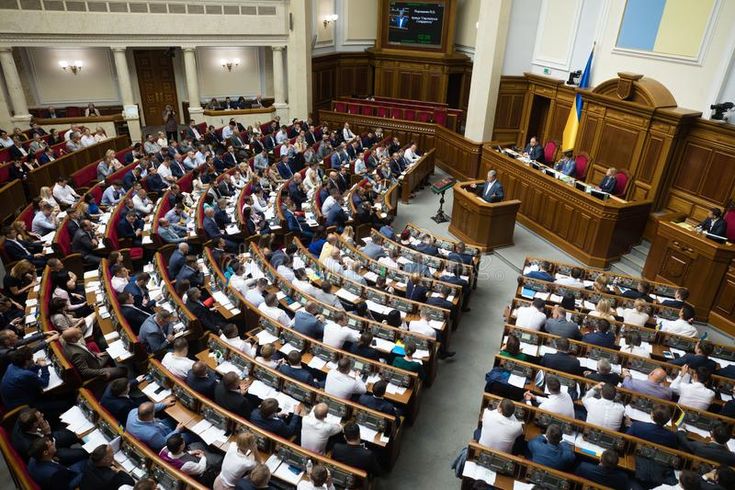
For Kyiv, accepting a foreign-brokered framework entails precarious domestic politics. Peace is desirable, but concessions perceived as territorial or sovereignty losses can provoke intense backlash — from political opponents, nationalist factions, and soldiers. Ukrainian leaders must balance immediate human relief against long-term national narratives. The process of acceptance matters: whether the deal is ratified through parliament, referendum, or executive decree will influence legitimacy. A rushed or opaque acceptance risks perceptions of capitulation, while prolonged internal debate could stall implementation and invite external pressure.
The presence of “minor issues” to resolve could reflect precisely those domestic red lines: borders, security guarantees, amnesty clauses, or political autonomy arrangements. Additionally, post-conflict reconstruction plans, accountability for war crimes, and reintegration of occupied territories are socially sensitive — mishandling them could fracture national unity. Successful peace on Ukrainian terms will therefore require inclusive political processes, clearly articulated safeguards for sovereignty, and transparent reconstruction commitments to build durable consensus.
5) Russia’s strategic ambiguity: signaling, domestic politics, and bargaining posture
Moscow’s cautious public stance — calling the U.S. plan “the only concrete” option while avoiding detailed commitments — is classic strategic ambiguity. Publicly acknowledging a framework without binding acceptance preserves bargaining leverage and domestic face. Russia can claim engagement in diplomacy while retaining flexibility to demand better terms, delay implementation, or extract concessions on other fronts (sanctions relief, security architecture). Domestically, the Kremlin must balance nationalist constituencies and security elites who expect favorable outcomes; fully accepting a deal that appears to cede gains could be politically costly.
Ambiguity also allows Russia to calibrate reactions to domestic unrest or other geopolitical pressures. From a negotiation standpoint, ambiguity is an effective tactic to buy time, gauge Western unity, and test Ukraine’s domestic resilience. However, protracted ambiguity increases the risk the agreement collapses or is implemented selectively. For Western negotiators, the challenge is to convert Russian rhetorical acceptance into verifiable commitments backed by enforcement measures — or to prepare contingency plans should Moscow renege.
6) Implementation, verification, and enforcement: the technical heart of any settlement
A peace framework’s success hinges on detailed implementation mechanisms — sequencing of troop withdrawals, verification regimes, third-party monitors, sanctions relief timelines, and dispute-resolution procedures. Weak or vague mechanisms invite violations and unilateral reinterpretation. Effective verification may require independent international monitors, transparent data sharing (e.g., satellite, on-site inspections), and clear thresholds for sanctions reinstatement if breaches occur. Enforcement poses thorny questions: who enforces? NATO? OSCE? UN peacekeepers? Each option carries political implications and legitimacy concerns.
Additionally, the deal must handle unilateral spoilers — non-state militias or political factions opposed to terms — who can destabilize the process. Financial and logistical support for reconstruction and demobilization will also determine durability: without credible economic incentives for compliance, actors may calculate benefits of reverting to conflict. Negotiators must therefore embed contingency clauses, trigger mechanisms, and multilateral buy-ins to manage violations and maintain a credible deterrent to backsliding.
7) U.S. domestic politics and credibility: opportunity and risk for Washington
Acting as broker gives the U.S. a chance to reassert diplomatic leadership, but it also introduces domestic political risk. Success will be lauded as a major foreign-policy achievement; failure or an unpopular deal could become fodder for political opponents who will allege misjudgment or overreach. The legal and political environment in the U.S. (e.g., polarized media, elections, congressional oversight) complicates the administration’s ability to deliver sustained support for implementation — Congress controls funding for troop deployments, aid, and reconstruction.
Moreover, the same polarization that complicates foreign policy also affects public messaging: different constituencies will interpret concessions differently — some as pragmatic peace-making, others as dangerous appeasement. The administration must therefore build bipartisan support for the deal’s key elements (verification, economic aid) to ensure continuity across political cycles. Failure to secure domestic consensus risks the treaty’s eventual unraveling if a successor administration withdraws support.
8) Legal development in the U.S.: dismissal of charges — procedural fault lines and rule-of-law implications

The judicial dismissal of charges against high-profile figures on procedural grounds (e.g., incorrect appointment of the prosecuting U.S. attorney) spotlights the delicate architecture of legal accountability. On one level, it underscores a fundamental principle: proper procedure is sacrosanct in criminal justice. However, in politically charged prosecutions, procedural dismissals can be interpreted as technical victories that leave substantive accountability unresolved. This dynamic creates two risks: first, public faith in legal processes can erode if citizens perceive that form trumps substance; second, prosecutors and oversight bodies may become more cautious or politicized in appointment processes to avoid future technical reversals.
For future investigations of officials and institutions, this precedent may heighten scrutiny of appointment processes, necessitate statutory fixes, or prompt appeals to higher courts. Politically, both defenders and critics will spin the outcome: defendants will argue vindication, while critics will claim impunity. The broader implication is a renewed conversation about balancing procedural safeguards with mechanisms ensuring high-profile cases are insulated from avoidable technical failures.
9) Venezuela, aviation warnings, and regional security: signals, escalation risks, and humanitarian consequences
The FAA’s warning about heightened military activity near Venezuelan airspace and subsequent airline suspensions illustrate how aviation policy becomes a lever of geopolitical pressure. Airlines tend to avoid perceived high-risk airspace to protect passengers and assets; when major carriers suspend service, the economic and humanitarian ripple effects are immediate — trade routes are disrupted, medical and NGO logistics complicated, and citizens face travel and remittance disruptions. The military buildup (including reported U.S. naval assets) signals a robust contingency posture that can be intended to deter illicit activities or to exert leverage on the Maduro government.
But using aviation warnings as political tools risks provoking regional escalation and raising questions about proportionality: is this primarily counter-narcotics enforcement, or is it a coercive strategy aimed at regime pressure? Neighboring countries and international partners will watch carefully: misperception or miscalculation at sea or in the air could spark incidents. For humanitarian actors, access constraints risk compounding Venezuela’s already severe economic and social crisis. Policymakers should weigh tactical advantages of pressure against the long-term costs to regional stability and civilian welfare.
10) Scenario planning: best outcomes, worst outcomes, and plausible middle paths

Given the high uncertainty, three broad scenarios matter. Best-case: the framework is codified into a detailed agreement with robust verification, phased withdrawal, multilateral reconstruction funds, and transitional governance measures; violence declines, humanitarian relief flows, and regional tensions ease. Middle-case: a shaky agreement is implemented unevenly; localized skirmishes persist, sanctions and aid are managed conditionally, and the region experiences intermittent instability but no large-scale war. Worst-case: ambiguity and spoilers cause the deal to collapse; Russia either rejects enforceable terms or violates them; Ukraine faces renewed offensives, NATO faces eroded cohesion, and regional actors see instability spill over (e.g., migration, energy shocks).
The legal procedural issues in the U.S. add a domestic instability vector — politicized legal fights may distract policymakers and limit sustained attention. Policymakers should pursue hedging strategies: build robust verification, secure multilateral commitments, shore up political consensus at home, and prepare contingency military and humanitarian plans. Scenario planning should also integrate communications strategies to manage domestic expectations and reduce the space for misinformation to derail peace processes.
About the Author