1. Federal Reserve (Fed)’s 2026 outlook under scrutiny as leadership change looms
The Fed is entering what analysts call a potentially turbulent 2026, as its current chair’s term ends in May — prompting expectations that U.S. President Donald J. Trump will soon nominate a successor .
This leadership transition comes at a critical moment: markets globally are jittery after recent bond-market shocks, and the Fed’s monetary policy decisions will have outsized impact on interest rates, inflation, and economic growth in the coming year. The challenge for the Fed will be balancing political pressure with the institution’s long-standing independence — a tension likely to intensify under a new appointee. For investors, businesses, and households, the choices made in early 2026 could shape borrowing costs, mortgage rates, and consumer inflation for years.
2. U.S. Department of Justice (DOJ) rolls back “disparate impact” rule under Title VI — civil-rights law shift
The DOJ issued a rule change that removes “disparate-impact” liability from its Title VI regulations — a major shift in how civil-rights enforcement works in institutions receiving federal funding. Under the new rule, agencies and organizations will no longer be held liable for policies that have discriminatory effects on protected groups unless there is evidence of intentional discrimination .
Thank you for reading this post, don't forget to subscribe!Supporters argue this restores “merit-based” fairness and removes burdensome compliance requirements. Critics warn it weakens protections for historically marginalized groups, since many discriminatory practices operate through structural and systemic effects rather than explicit intent. The change could reshape the legal landscape around race, gender, and national-origin discrimination in education, housing, and public services — shifting debate toward whether outcomes or intentions matter more in assessing equality.
3. US Supreme Court declines to intervene in prominent free-speech and book-ban cases
Today the Supreme Court refused to hear two high-profile appeals: one challenging a Texas law allowing removal of certain books from public libraries (including titles on race and LGBT issues), and another challenging a state’s denial of a controversial vanity license plate .
By declining to intervene, the Court let stand lower-court rulings that permit broad speech restrictions — decisions many civil-liberties advocates decry as weakening First Amendment protections. The outcome signals that, at present, the justices are not eager to expand constitutional safeguards for free expression in state-level regulation contexts. For libraries, schools, and individuals, the ruling may embolden local authorities to exert greater control over public discourse and access to controversial content.
4. New national-security doctrine under Trump signals pivot away from Europe toward Latin America — global ripple effects
The administration’s newly published 2025 national security strategy marks a major shift, re-prioritizing U.S. military and political attention from traditional allies in Europe toward Latin America, while softening the long-held antagonistic stance toward China .
The document frames Europe — not Russia or China — as the primary geopolitical concern, criticizing European immigration policies and progressive social values, and expressing support for nationalist movements. Simultaneously, it emphasizes controlling migration and drug trafficking in the Western Hemisphere, potentially reshaping U.S. engagement in Latin America. For global partners, this could mean a destabilization of long-standing alliances; for Latin American nations, more intense U.S. scrutiny and intervention. The strategy represents a more transactional, economics-first foreign policy — one where ideological alignment is secondary.
5. U.S. plans classified briefing to Congress on alleged illicit operations in Latin America — Venezuela tensions rise
Top U.S. national-security officials are scheduled to brief the bipartisan “Gang of Eight” congressional leadership on a classified matter amid escalating tensions with Venezuela. The meeting follows a controversial series of U.S. military operations targeting alleged drug traffickers in the Caribbean and Pacific — operations critics argue may exceed legal bounds .
The administration frames these strikes as part of its “war on cartels” and a broader effort to curb drug and migration flows. But with questions mounting over their legality, civilian impact, and potential for escalation, the briefing may become a flashpoint: Congress could demand accountability, impose restrictions, or trigger public backlash. For U.S.–Latin America relations, the episode underscores rising tensions and a shift toward more aggressive enforcement-oriented foreign policy.
6. Civicus downgrades U.S. civic-health rating — concern over free speech, civil liberties under Trump

Civicus, a global watchdog, has lowered the U.S.’s civic health rating from “narrowed” to “obstructed,” citing a wave of restrictive measures during the current Trump administration. The downgrade stems from increased suppression of dissent, militarized responses to protests, expanded surveillance and harassment of civil society groups, visa threats to foreign-born activists, and alleged media censorship.
Such a shift marks a symbolic blow — placing the U.S. alongside countries like Hungary or Brazil, nations often criticized for democratic backsliding. For Americans and global observers alike, the downgrade signals that rights once considered foundational — free speech, press freedom, protest rights — are now under structural threat. The report could energize domestic activism, legal challenges, and international scrutiny.
7. Historic $12 billion aid package for American farmers announced — economic tensions and political strategy collide
Facing fallout from trade tensions with China and rising costs, the Trump administration announced a $12 billion assistance package to support American farmers, particularly soybean growers. The aid is funded by the Commodity Credit Corporation .
The move aims to stabilize rural America ahead of the 2026 midterms, signaling care for blue-collar and agricultural communities. While some farmers welcomed relief, critics argue the bailout masks deeper structural issues — including market volatility, tariff-induced export disruptions, and long-term trade insecurity. Economically, the aid may ease short-term pain, but it does not guarantee long-term stability without broader reforms. Politically, it’s a strategic bid to secure support from rural constituencies.
8. Global bond markets wobble as Fed begins two-day meeting — yields stabilize but uncertainty remains
As the two-day meeting of the Fed kicked off, global bond markets — already shaken by recent volatility — showed signs of stabilizing. However, investors remain cautious, uncertain how the central bank will navigate future rate decisions under new leadership .
In this context, markets are weighing risk: Will the Fed tighten further to curb inflation or pivot to ease pressures on borrowing costs? The outcome could influence mortgage rates, corporate borrowing, and overall investment flows. For households and businesses, even small shifts in bond yields ripple through loan costs, mortgage payments, and savings returns.
9. Harsh winter storm warnings sweep across the northern U.S. — major disruption expected

Large swathes of the northern United States — including states like Minnesota, North Dakota, Wisconsin, Michigan, Montana, and Wyoming — are under winter storm warnings as a powerful “Alberta clipper” system moves in, raising prospects of significant snow, ice accumulation, and high winds .
Forecasts predict 4–7 inches (10–18 cm) of snow in many regions, with gusts up to 60 mph, and conditions likely to lead to “white-out” events, hazardous travel, and possible closures of roads, bridges, and airports. For communities unaccustomed to heavy snowfall, or without robust snow-removal infrastructure, the storm could lead to serious disruptions: power outages, supply chain issues, delayed travel, and risk to lives. Local and state agencies are on high alert.
10. A major meteor shower — the Geminid meteor shower — peaks this weekend, offering rare sky-watching opportunity for Americans
Astronomers report that the Geminid meteor shower — one of the brightest and most active of the year — will peak this weekend, with up to 120 meteors per hour visible under dark skies. The shower originates from debris from asteroid 3200 Phaethon, rather than a comet, which makes it somewhat unusual.
For people across the U.S. (especially those away from city lights), the event offers a rare chance for spectacular astronomical viewing. Experts recommend viewers avoid light pollution, stay outside for 15–20 minutes to let eyes adjust, and consult the sky near constellation Gemini. It’s a welcome distraction from political and economic turbulence — and a reminder of nature’s broader rhythms.
11. A luxury-resale platform, BESTIR, expands to the U.S., acquiring rival channel Whatnot — signals evolving resale economy
The global live-shopping leader BESTIR announced its expansion into the U.S. market through the acquisition of Whatnot, positioning itself as a major live luxury resale channel for American consumers.
This move underscores the growing appetite in the U.S. for secondhand luxury goods and the rise of live e-commerce platforms. For consumers, it could mean easier access to luxury items at discounted prices, and more dynamic resale markets. For traditional retail and physical luxury stores, the shift poses a disruptive challenge. The expansion also signals that live-shopping — once niche — is becoming a mainstream part of American consumer habits.
12. Congressional resistance to large-scale U.S. troop withdrawals from Europe and South Korea — defense posture stays firm
Congress is pushing back against plans to withdraw major U.S. troop contingents from Europe and South Korea, limiting the Pentagon’s ability to execute large-scale reductions abroad.
The move suggests a bipartisan consensus that even as the U.S. pivots strategically toward Latin America under its new security doctrine, Washington is not ready to cede commitments in other key theaters. For allies in Europe and Asia, it’s a reassurance — reducing fears of abrupt U.S. disengagement. For defense planners, it maintains global readiness and signals continuity in U.S. strategic posture.
13. Media and civic-society crackdown escalates — free-speech and protest rights under threat, per watchdogs
In addition to the downgrade by Civicus on civic health, the broader landscape shows increased restrictions on protest, media, and activism. Allegations include harsh responses to protests, surveillance of civil-society groups, and visa threats to foreign-born activists.
Combined with changes to civil-rights enforcement and core First Amendment cases, these developments paint a troubling picture for democratic norms and free expression in the U.S. For journalists, activists, and civil-society organisations, the environment is becoming riskier. The turning tide also raises questions about the United States’ global image as a bastion of democracy.
14. Economy watchers eye whether markets will stabilize or remain volatile as Fed meeting begins
As the Fed convenes, markets globally remain cautious. Although bond yields showed some stabilization, recent volatility — driven by shifting expectations about interest rates, inflation, and economic growth — has left investors on edge.
In the near term, both stock and bond investors will watch for the Fed’s tone: hawkish hints could raise borrowing costs and dampen risk assets; dovish signals might boost equities but carry inflation risk. For ordinary Americans, the Fed’s decision could affect mortgage rates, auto loans, and credit-card rates — with real consequences for budgets, home-buying, and consumer spending.
15. Supreme Court’s recent decisions and inactions indicate changing jurisprudence on free speech and redistricting — long-term electoral impact
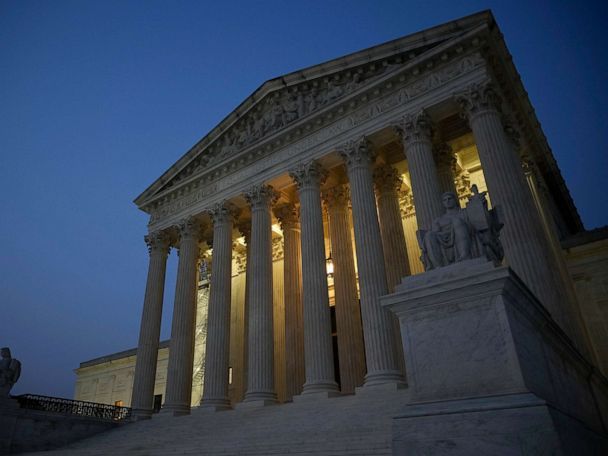
By declining to take up major cases on library book bans and vanity plates, and by upholding Texas’s new congressional map (which may influence redistricting in other states), the Supreme Court appears to be signaling a more permissive stance toward government regulation of expression and politically charged electoral maps.
The result could reshape political representation and civil liberties across the country. In states with tight partisan control, redistricting may entrench incumbent advantage; in communities reliant on public libraries or state-regulated identifiers (like license plates), the Court’s hands-off approach may embolden local restrictions. Over time, this could redefine the balance between individual rights and state power in everyday American life.
About the Author