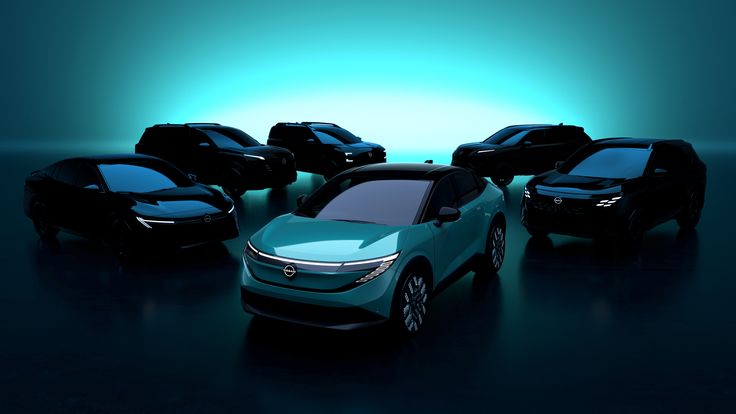
1. Level-5 Fully Autonomous Vehicles
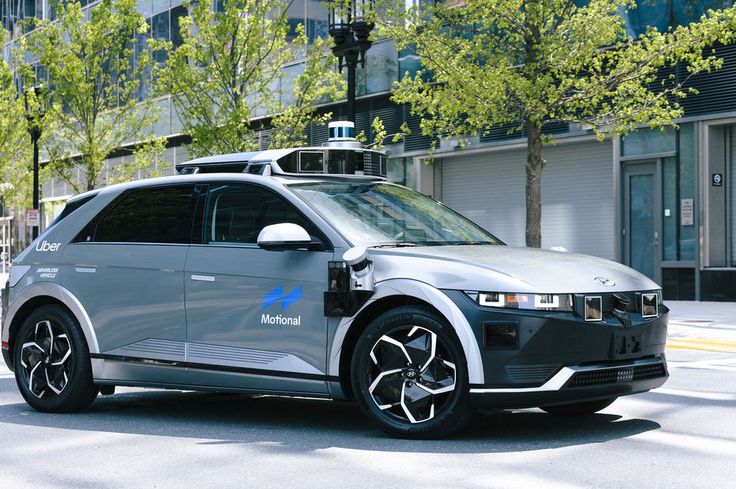
Level-5 autonomy means vehicles that require no human intervention under any condition. Unlike present Level-2/3 systems that need driver oversight, Level-5 cars will rely on redundant sensor stacks (LiDAR, radar, cameras, ultrasonic), ultra-precise HD mapping, and distributed AI that interprets complex, uncertain road scenes in real time. This shift transforms the car from a tool to a service: people become passengers, mobility becomes on-demand, and interiors are reimagined as living or workspaces. The safety upside is huge — the majority of crashes caused by human error (distraction, fatigue, impairment) could be eliminated. But achieving Level-5 requires breakthroughs beyond sensors: explainable AI for safety cases, millions of safe miles for validation, standardized simulation frameworks, legislative frameworks for liability, and robust cybersecurity. Operational deployment will likely begin in geo-fenced domains (campuses, planned cities) and expand as systems gain robustness. Economic impacts will cascade: driver jobs are affected, insurance and legal models evolve, and urban design may change as parking needs shrink. In short, Level-5 autonomy is a systemic change that touches hardware, software, law and society — not just a better cruise control.
2. Solid-State Batteries and Ultra-Fast Charging
Solid-state batteries replace liquid electrolytes with a solid medium, enabling markedly higher energy density, faster charge times and drastically improved safety (lower thermal runaway risk). With expected energy densities potentially doubling current lithium-ion cells, EV ranges of 600–1,000+ km on a single charge become plausible. Fast charging times (single-digit minutes) could rival refueling for combustion cars, addressing range anxiety and enabling long-distance EV adoption. Solid-state cells also promise longer cycle life and reduced cooling needs, shrinking pack weight and improving efficiency. Commercialization challenges remain: scalable manufacturing, interface stability, and cost reduction are active R&D fronts.
Thank you for reading this post, don't forget to subscribe!The systemic effect is profound — charging infrastructure deployment strategies change (fewer, higher-power hubs), secondary markets (battery second lives) shift, and EV TCO (total cost of ownership) becomes even more competitive. Industries beyond passenger cars — aviation, heavy trucks, marine — will watch closely because compact, energy-dense packs can unlock electrification in heavier segments. Once mass-manufacturable solid-state packs arrive, EV adoption will accelerate and the fossil-fuel replacement timeline could compress substantially.
3. Vehicle-to-Everything (V2X) & Cooperative Mobility

V2X extends vehicle connectivity to infrastructure, other vehicles, pedestrians and cloud services. Instead of isolated vehicles reacting locally, V2X creates an information fabric: traffic lights broadcast phase changes, roadside sensors announce hazards, and mobile phones/pedestrians signal presence. This cooperative awareness reduces collisions, smooths traffic flow, and optimizes routing to minimize emissions and delay. For autonomous fleets, V2X is the glue for coordinated maneuvers — platooning on highways, dynamic lane allocations, and virtual convoys. Data from infrastructure also improves real-time map accuracy and predictive traffic models.
Implementing V2X requires common communication standards (DSRC, C-V2X, later 6G layers), robust privacy protections, and resilient edge/cloud architectures to keep latency low. Urban planners can use V2X to implement demand-responsive lanes, smart intersections, and prioritized transit/EMS corridors. Economically, V2X enables new services: premium green routing, congestion pricing integration, and coordinated EV charging schedules that minimize grid impacts. When broadly deployed, V2X shifts safety from individual vehicle sensors toward system-level orchestration, letting vehicles make better decisions with shared situational awareness.
4. 6G & Ultra-Low Latency Vehicle Ecosystems
While 5G enables many current connected features, 6G (expected 2030+) promises terabit-class speeds and near-zero latency, enabling real-time sensor sharing at scale. For autonomous vehicles, 6G allows live transmission of high-fidelity sensor clouds, collaborative perception (one car’s camera supplements another’s blind spot), and distributed AI inference between vehicle and edge nodes. Ultra-fast links enable new architectures: lightweight onboard compute plus powerful edge AI that can run collective models trained on federated data. This supports ultra-responsive safety maneuvers, synchronized urban traffic control, and seamless AR overlays. 6G could also power vehicle-level digital twins for diagnostics and remote maintenance.
Achieving this requires massive infrastructure investment (densified cells, edge compute nodes), spectrum allocation, and secure, privacy-preserving protocols. As communication latency approaches microseconds, human reaction times become irrelevant — machines coordinate at physical timescales. The ripple effects include new business models for telco/auto partnerships, subscription services for premium low-latency lanes, and faster rollout of autonomous features through cloud-assisted upgrades.
5. Hydrogen Fuel-Cell Powertrains for Heavy Duty & Long Range
Hydrogen fuel cells generate electricity on-board using hydrogen and oxygen, producing only water vapor. Their rapid refueling (minutes) and high energy density make them ideal for long-haul trucks, buses, trains and industrial machinery where battery weight and charging downtime limit electrification. As “green hydrogen” (produced via renewables) scales, fuel-cell vehicles (FCVs) become a low-carbon solution for segments where battery electrification is impractical. Key challenges include building distribution networks, lowering electrolysis costs, and safe hydrogen storage/handling innovations. Advances in materials, catalysts and high-pressure tanks are addressing these.
In mixed mobility ecosystems, hydrogen and batteries likely become complementary: batteries for urban/light vehicles and hydrogen for heavy, continuous-duty operations. Infrastructure investments — filling stations, storage hubs and regulatory safety standards — must parallel vehicle adoption. If green hydrogen production becomes economical, fuel cells could reshape freight logistics, reduce carbon intensity of heavy transport, and enable cleaner ports and industrial fleets.
6. Advanced LiDAR, 4D Radar & Multi-Sensor Fusion
High-performance perception combines LiDAR, camera, radar, thermal imaging and emerging 4D radar that captures not just distance but object structure and motion in richer detail. Each sensor modality has strengths: cameras capture texture and color, radar penetrates adverse weather, LiDAR provides precise 3D geometry, and 4D radar adds velocity/shape cues. Sensor fusion — the AI process that merges all these feeds — produces a robust, redundant scene understanding resilient to failures or extreme conditions (night, fog, glare). Future sensor stacks will be smaller, cheaper, and energy efficient, enabling full-360° coverage on mass-market cars.
Fusion reduces false positives and provides the confidence levels needed for higher autonomy levels. The architecture will also include self-calibration and sensor health diagnostics to ensure safety. This convergence transforms perception from single-sensor heuristics to probabilistic world models — continuous, multi-modal, and privacy-aware — that let vehicles operate safely in diverse, unpredictable environments.
7. AI-First Driving Brains & Federated Learning
AI will be the “driving brain” — neural networks that plan trajectories, predict human behavior, and continuously learn from fleet data. Key evolution is federated learning: models improve by aggregating lessons from millions of vehicles without centralizing raw sensor data, preserving user privacy while accelerating performance gains. Explainable and verifiable AI becomes critical for safety certification; regulators will demand transparent model behavior and forensic logs. Onboard AI will split responsibilities: deterministic controllers for certified safety-critical loops and learned models for perception/prediction. Continuous validation — simulation, shadow mode testing, real-world post-deployment monitoring — becomes standard.
Fleet learning accelerates rare-event understanding (e.g., unusual intersections, edge-case weather events), enabling rapid rollout of fixes via OTA updates. The AI ecosystem also includes scenario databases, high-fidelity simulators, and standardized safety-case toolchains to argue that the system meets acceptable risk thresholds. As AI becomes central, cross-discipline teams (software, ethics, regulation) will define trustworthy autonomous mobility.
8. Augmented Reality & Holographic Head-Up Displays
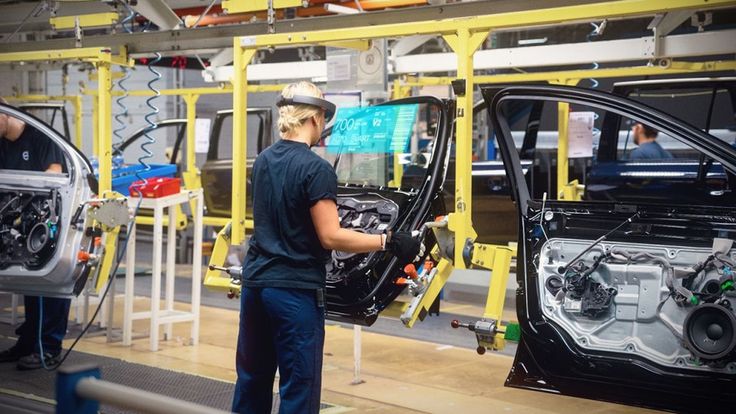
Augmented reality (AR) windshields and holographic HUDs overlay navigational cues, hazard highlights and contextual alerts directly onto the driver’s view. For partially automated driving, AR keeps drivers informed without demanding their visual focus to leave the road. For passengers in automated modes, AR turns travel time into augmented work or entertainment spaces. AR integration with V2X provides predictive overlays: highlighting a pedestrian about to cross, showing green-wave speed suggestions, or indicating available curbside delivery slots. Holographic interfaces also support gesture and eye-gaze interactions, reducing the need for physical controls.
Critical to adoption are ergonomic design and minimizing distraction: overlays must be intuitive, low-clutter and dynamically adaptive to driving demands. AR systems will also be useful in maintenance and fleet operations — technicians can receive step-by-step holographic instructions. In sum, AR HUDs convert raw data into contextually relevant, spatially anchored cues that improve safety and usability.
9. Smart Digital Cockpit, Voice & Gesture Control, and Software-Defined Vehicles
The cockpit evolves into a software-centric environment: large, reconfigurable displays, AI assistants, voice & gesture controls, and personalized UX tied to biometric profiles. Vehicle interiors become adaptive — seat position, climate, infotainment and driving modes load based on recognized users. Over-the-air (OTA) updates deliver new features, security patches and optimizations long after purchase, turning cars into evolving platforms. This software-first approach unlocks monetization via subscriptions (advanced driver assistance features, premium maps, entertainment), but also demands secure update mechanisms, app sandboxes and standardized APIs.
User data privacy and consent frameworks must be embedded. The new cockpit design philosophy emphasizes decluttered physical controls and multimodal inputs to reduce cognitive load. Software-defined vehicles blur the line between carmaker, software vendor and cloud provider, fostering ecosystems where third-party developers create vertical apps — e.g., commuting assistants, parcel delivery scheduling, or health monitoring dashboards.
10. Predictive Maintenance, IoT & Digital Twins
Hundreds to thousands of sensors per vehicle will continuously stream telemetry to onboard and cloud systems. AI models use that telemetry for predictive maintenance: forecasting component wear, scheduling service proactively, and ordering replacement parts before failure. Digital twins — virtual replicas of each vehicle — simulate wear and validate repair plans, reducing downtime and diagnostic cost. For fleets, predictive analytics optimize utilization, reduce unscheduled breakdowns and extend asset lifetimes.
This approach also enables new business models: outcome-based contracts (pay per uptime), remote diagnosis, and subscription maintenance. Privacy and secure telemetry channels are vital; OEMs must protect customer data while providing actionable insights. In the long run, predictive maintenance reduces lifecycle emissions (fewer emergency replacements), improves safety and cuts total operating cost, especially for commercial operators and shared fleets.
11. Biometric Identity, Health Monitoring & Driver State Assessment
Biometric authentication (face, fingerprint, voice, lip recognition) secures vehicles against theft and personalizes cabin settings. Beyond identity, continuous health monitoring (heart rate, respiration patterns, eye closure) enables driver state assessment: fatigue, intoxication, medical emergencies or stress. When unsafe conditions are detected, the vehicle can escalate responses — alerts, lane-holding, reduced speed or safe pull-over maneuvers. In shared and ride-hailing contexts, biometrics protect payments and access while enabling personalized profiles for each rider. Medical telemetry integration could assist first responders by transmitting vitals during emergencies. Ethical, legal and privacy frameworks must govern what biometric data is stored, for how long, and who can access it. Done right, biometric systems enhance security and safety while enabling tailored, frictionless user experiences.
12. Autonomous Delivery Pods, Micromobility & Last-Mile Robotics
Urban logistics will be reshaped by small autonomous delivery pods, sidewalk robots and micromobility fleets. These systems reduce reliance on large trucks for last-mile deliveries, lowering emissions and congestion in dense neighborhoods. Autonomous lockers and curbside micro-hubs paired with robotic delivery enable efficient routing and contactless drop-offs. For cities, this means rethinking curb management, creating delivery lanes, and integrating robots into pedestrian flows safely. Commercial operators benefit from lower labor costs, extended delivery windows, and route optimization via AI. Social acceptance depends on safety regulations, predictable behaviors from delivery robots, and inclusive design that avoids sidewalk obstruction. When scaled, these systems cut urban delivery footprints, improve traffic flow and make e-commerce more sustainable.
13. Urban Air Mobility (eVTOLs) & Aerial Taxis
Electric vertical take-off and landing (eVTOL) aircraft and urban air mobility platforms aim to move people and goods through urban airspace, relieving surface congestion. Short interhub trips (10–50 km) that currently take hours in traffic could be reduced to minutes. eVTOLs are often electric or hybrid-electric, quieter than helicopters and require vertiport infrastructure for takeoff/landing and charging. Integration challenges include airspace management, noise regulation, vertiport siting, pilot/autonomy training and public acceptance.
Successful UAM systems will likely integrate with ground mobility via multimodal trip planners and urban logistics hubs. Initially, eVTOLs may serve premium or emergency services, then democratize as costs fall. Regulation, safety certification and air traffic automation will be decisive factors determining how widely and quickly aerial mobility becomes a daily reality.
14. Sustainable Materials, Circular Supply Chains & Battery Reuse

Sustainability goes beyond tailpipe emissions. Future vehicles will use recycled and bio-based materials (recycled plastics, natural fiber composites, bio-leathers) to reduce embodied carbon. Battery circularity — repurposing EV packs for stationary storage and recycling critical materials (lithium, cobalt, nickel) — becomes standard practice. Design for disassembly and modular components facilitate repair and reuse, supporting right-to-repair movements and reducing lifecycle costs. Automakers will build transparent supply chains with traceability (blockchain and IoT tags) to verify ethical sourcing and reduce conflict minerals. These practices reduce environmental impact, improve resilience to raw material shocks, and align mobility with corporate sustainability commitments and regulation. Consumers increasingly value lifecycle emissions, so sustainable design becomes both regulatory necessity and market differentiator.
15. Regulations, Cybersecurity & New Business Models
Technological change demands legal and economic adaptation. Regulators must define liability for autonomous crashes, certify AI systems, approve OTA update pipelines, and set standards for V2X/6G communication. Cybersecurity is critical: connected vehicles are high-value targets and must defend safety-critical subsystems with hardware roots of trust, secure boot, encrypted telematics and intrusion detection. New business models emerge: mobility-as-a-service (MaaS), feature subscriptions, data monetization, and outcome-based fleet contracts. Insurance will shift toward product liability for OEMs and software providers.
Public investments are needed in smart infrastructure, charging/hydrogen networks, and urban planning to host new mobility forms (delivery lanes, vertiports). Social policy must also address workforce impacts — retraining for drivers and technicians — and equity to ensure vulnerable populations gain access to these benefits. In short, the technology revolution must be matched by policy, standards and responsible governance to realize a safer, inclusive mobility future.
About the Author