1. The Greenland Envoy Appointment and Danish Diplomatic Backlash

President Trump has officially appointed Louisiana Governor Jeff Landry as the first-ever Special Envoy to Greenland. This move underscores the administration’s persistent interest in the island’s strategic location and vast mineral resources, which the President has previously compared to a “large-scale real estate deal.”
Analysis: This appointment signals a shift from rhetoric to formal policy. By placing a high-profile domestic ally like Landry in this role, the U.S. is signaling it views Greenland not just as a neighbor, but as a critical theater for national security and resource independence. However, the move has ignited a diplomatic firestorm; Denmark has already announced plans to summon the U.S. Ambassador, viewing the appointment as an infringement on Danish sovereignty and a provocative attempt to bypass Copenhagen in bilateral dealings with the semi-autonomous territory.
2. Escalation in the Caribbean: Pursuit of Third Venezuelan Tanker
U.S. Naval forces are currently pursuing a third oil tanker off the coast of Venezuela as part of a tightened maritime blockade. Tensions have reached a fever pitch as Caracas formally accuses the United States of “international piracy” and “theft of sovereign resources.”
Thank you for reading this post, don't forget to subscribe!Analysis: The administration is utilizing a “maximum pressure” strategy to choke off the Maduro government’s primary revenue stream. This aggressive maritime posture reflects a broader shift in Latin American policy, where the U.S. is reclaiming its “sphere of influence” to counter Chinese and Russian footprints in the region. Critics warn that this could lead to a direct naval confrontation or a humanitarian crisis if the blockade continues to disrupt essential imports, while supporters argue it is the only way to force democratic change in Venezuela.
3. The “Epstein Files” Fallout and Congressional Contempt Charges
The Department of Justice’s recent release of files related to the late Jeffrey Epstein has sparked national outrage. Lawmakers from both sides of the aisle, including Rep. Ro Khanna (D-CA) and Rep. Thomas Massie (R-KY), are now drafting inherent contempt charges against Attorney General Pam Bondi, alleging that the DOJ is withholding and redacting critical information.
Analysis: The disappearance of at least 16 files from the public DOJ portal has deepened public mistrust. For many, this is seen as a “slap in the face” to survivors who were promised full transparency. The bipartisan nature of the backlash is rare in the current political climate, suggesting that the “Epstein Saga” remains a potent political lightning rod capable of uniting populist elements of both parties against the perceived “Deep State” or protected elites.
4. Peace Talks in Miami: US-Russia Negotiations over Ukraine
Over the weekend and into today, high-level U.S. and Russian officials—including Russian envoy Kirill Dmitriev—met in Miami for what have been described as “constructive” talks regarding the war in Ukraine. This follows a 20-point plan presented by the Trump administration to find an “imperfect” end to the conflict.
Analysis: The Miami summit represents the most significant direct engagement between Washington and Moscow in years. While the U.S. pushes for a ceasefire and a new security framework, Ukrainian President Zelenskyy has remained firm that no territorial concessions can be made without Ukrainian consent. The “constructive” label suggests a potential breakthrough, but the sticking points—NATO expansion and territorial control—remain formidable. The administration is essentially betting that a “deal-maker” approach can settle a war that traditional diplomacy failed to stop.
5. GSA Announces $1 Billion in “Deregulatory Savings”

The General Services Administration (GSA) announced today the completion of a major regulatory reform initiative, claiming it will save taxpayers nearly $1 billion over the next decade. The reform involves eliminating hundreds of “outdated” federal regulations and dismantling various DEI (Diversity, Equity, and Inclusion) programs.
Analysis: This is a cornerstone of the “Department of Government Efficiency” (DOGE) initiative. By framing deregulation as a direct cost-saving measure for the taxpayer, the administration is seeking to build public support for a broader “hollowing out” of the federal bureaucracy. While proponents see this as a necessary streamlining of a bloated state, critics argue that the removal of these regulations could weaken environmental protections and labor standards under the guise of fiscal responsibility.
6. The “Warrior Dividend”: Christmas Bonuses for Military Personnel
As of today, the first wave of $1,776 checks—dubbed the “Warrior Dividend”—is arriving in the bank accounts of over 1.45 million military service members. President Trump announced the payment as a “honor to our nation’s founding” and a reward for military service.
Analysis: This is a classic populist move designed to solidify support within the military community. By choosing the symbolic amount of $1,776, the administration is leaning heavily into patriotic branding. Economically, the move is being scrutinized for its impact on the federal deficit, but politically, it serves as a powerful end-of-year “thank you” that contrasts sharply with the previous administration’s focus on military social reforms.
7. Biden Administration Economic Comparisons and the “Inflation Pivot”
In a recent year-end address, the White House released data claiming that prices for gas, cars, and hotel stays are dropping faster than at any point in the last decade. The administration is explicitly benchmarking these “successes” against the high inflation rates of the Biden-Harris era.
Analysis: The “war on prices” is the administration’s primary domestic narrative. By constantly reminding the public of the 2021-2024 price surges, they are attempting to lock in a perception of economic recovery. However, while some sectors like energy have seen price drops due to “Day One” executive orders on drilling, other areas like housing remain stubbornly high, leading to a polarized public view of the “Trump Economy.”
8. Reverse Migration: A New Trend in U.S. Labor and Housing
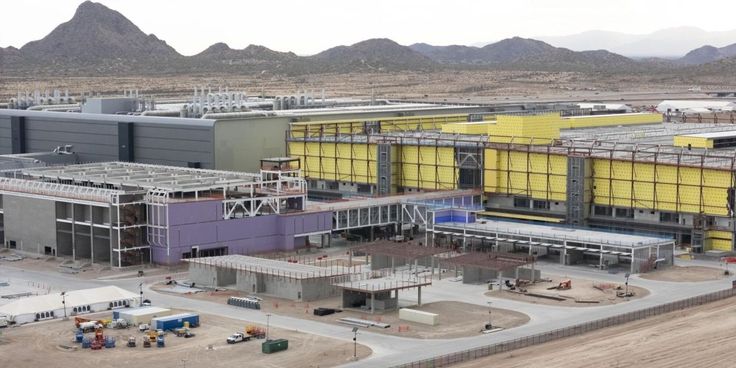
The White House today highlighted a “reverse migration” trend, claiming that for the first time in 50 years, more people are leaving the United States than entering illegally. The administration attributes this to mass deportation efforts and stricter border controls.
Analysis: If the data holds, this represents a monumental shift in American demographics and labor markets. The administration argues this “reverse migration” is freeing up housing and jobs for American citizens, potentially cooling the overheated rental market. Opponents, however, point to labor shortages in agriculture and construction as a direct consequence, warning that the long-term economic cost of a shrinking labor pool may outweigh the short-term benefits of lower housing demand.
9. US Strikes on “ISIS Thugs” in Syria
The U.S. military launched more than 70 targeted strikes on alleged ISIL targets in Syria today. The Pentagon described the operation as a “cleanup” of remnants of the Islamic State to prevent a resurgence following the fall of the Assad regime.
Analysis: With the recent collapse of Bashar al-Assad’s government, the power vacuum in Syria has become a primary security concern. The U.S. is moving aggressively to ensure that Islamist militants do not seize the moment. This indicates that while the administration talks about “ending wars,” it remains willing to use massive air power to maintain a level of stability that favors U.S. interests in the Middle East.
10. The TikTok Sale: Oracle and Silver Lake Move In
New details emerged today regarding the sale of TikTok’s U.S. operations to a joint venture involving Oracle, Silver Lake, and Abu Dhabi-based MGX. This follows the divestiture mandate signed earlier this year.
Analysis: This marks the end of TikTok as a Chinese-controlled entity in the U.S. The involvement of Oracle and Silver Lake—both with deep ties to the current administration—suggests a “national security” solution that also benefits friendly domestic tech giants. For users, the transition is expected to be seamless, but for the tech world, it sets a precedent for how the U.S. will handle foreign-owned “critical digital infrastructure” in the future.
11. Red-Handed: The $1.6 Billion Powerball Fever
The Powerball jackpot has climbed to an estimated $1.6 billion ahead of the next drawing, the fifth-largest in history. Across the U.S., lottery ticket sales are surging, providing a brief cultural distraction from political tensions.
Analysis: While seemingly light news, the “lottery fever” often serves as a barometer for economic anxiety. Historically, lottery participation increases when people feel that traditional paths to wealth—like wage growth or savings—are out of reach. The massive jackpot also provides a temporary windfall for state budgets, though the “lottery curse” remains a topic of cultural fascination.
12. Mass Deportation Exit Bonuses: The $3,000 DHS Offer
The Department of Homeland Security (DHS) has tripled its “exit bonus” to $3,000 for undocumented migrants who agree to self-deport by December 31, 2025. This is part of a “voluntary compliance” push before more aggressive enforcement begins in 2026.
Analysis: This policy is an attempt to reduce the logistical and legal costs of mass deportations. By offering a “carrot” before the “stick,” the administration hopes to clear a significant portion of the undocumented population without the visual and political optics of forced raids. Human rights groups have slammed the move as “coercive,” while the administration views it as a pragmatic solution to a complex border crisis.
13. Texas Redistricting and the Supreme Court “Mess”
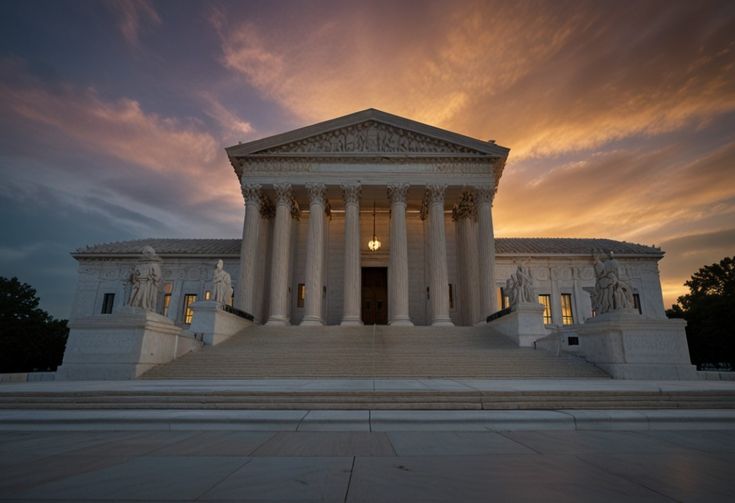
A new report from SCOTUSblog today highlights the “utter mess” of redistricting law following the Supreme Court’s refusal to intervene in partisan gerrymandering. A mid-decade map adopted by Texas, aimed at gaining five more GOP seats in the 2026 midterms, is at the center of the controversy.
Analysis: With the 2026 midterms on the horizon, the battle for control of the House is already being fought in the courts. The Supreme Court’s “hands-off” approach to partisan maps effectively gives state legislatures a green light to draw lines for “naked partisan advantage.” This is likely to lead to an even more polarized Congress, where seats are decided by map-makers rather than swing voters.
14. Stock Market: AI Rebound and NVIDIA’s China Pivot
The stock market closed higher today, led by a rebound in AI stocks. Notably, reports suggest the Trump administration may allow NVIDIA to sell its high-end H200 chips to “approved customers” in China, a significant softening of previous trade restrictions.
Analysis: This “selective trade” approach suggests the administration is willing to use high-tech exports as a bargaining chip in broader trade negotiations with Beijing. It also reflects the lobbying power of the U.S. semiconductor industry, which argues that a total ban on the Chinese market would starve U.S. firms of the R&D capital needed to stay ahead of China.
15. The “White Christmas” Climate Reality

As millions prepare for holiday travel, weather reports today indicate that while northern states will see a “White Christmas,” much of the South and West are experiencing record-warm temperatures for late December.
Analysis: This weather pattern is fueling the ongoing debate over climate policy. While the administration has moved to exit international climate agreements and expand fossil fuel production, the reality of “Green Christmases” in historically cold regions is keeping environmental issues at the forefront of the public mind. It highlights the growing gap between the nation’s energy policy and the visible shifts in its climate.
About the Author